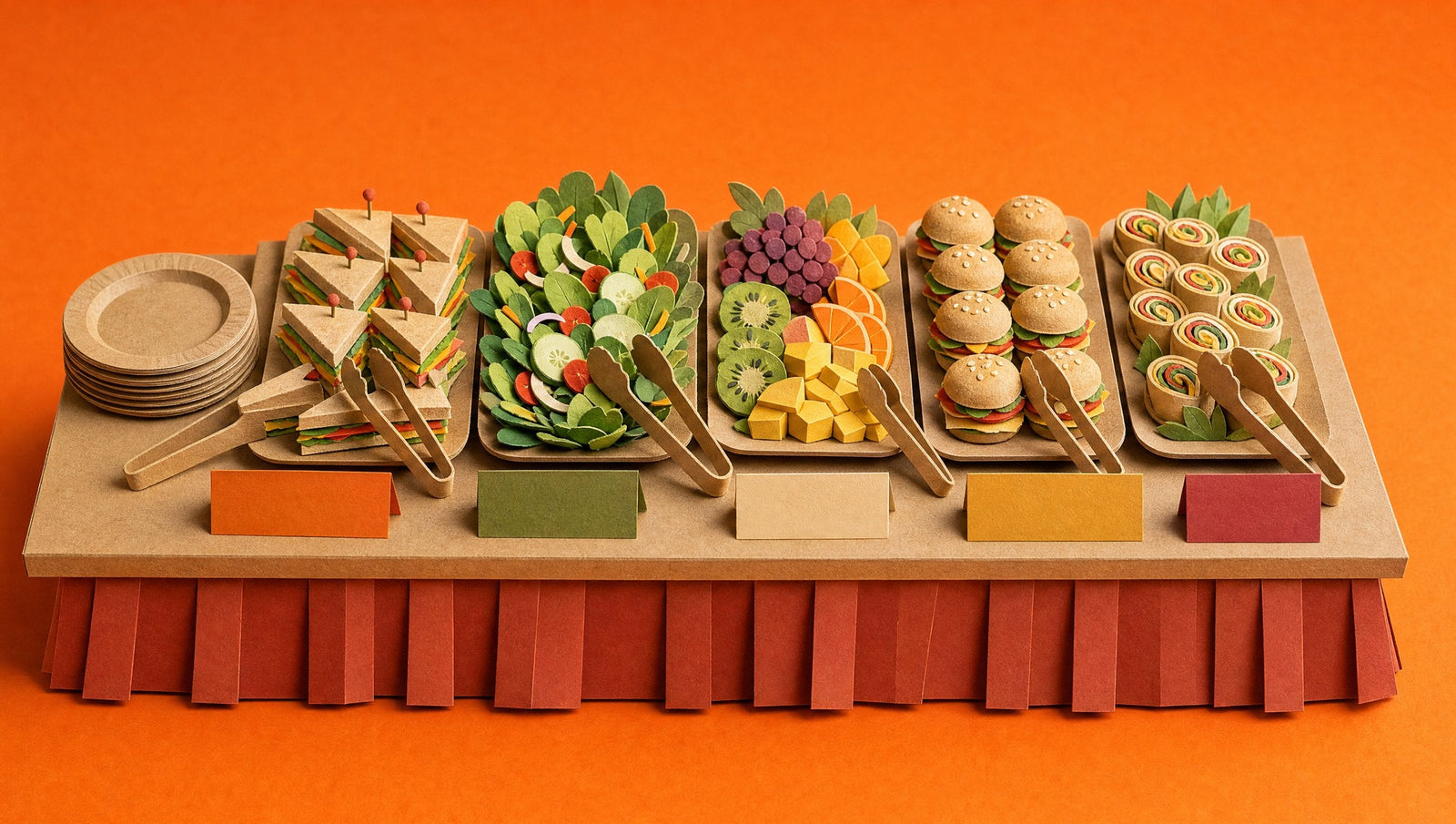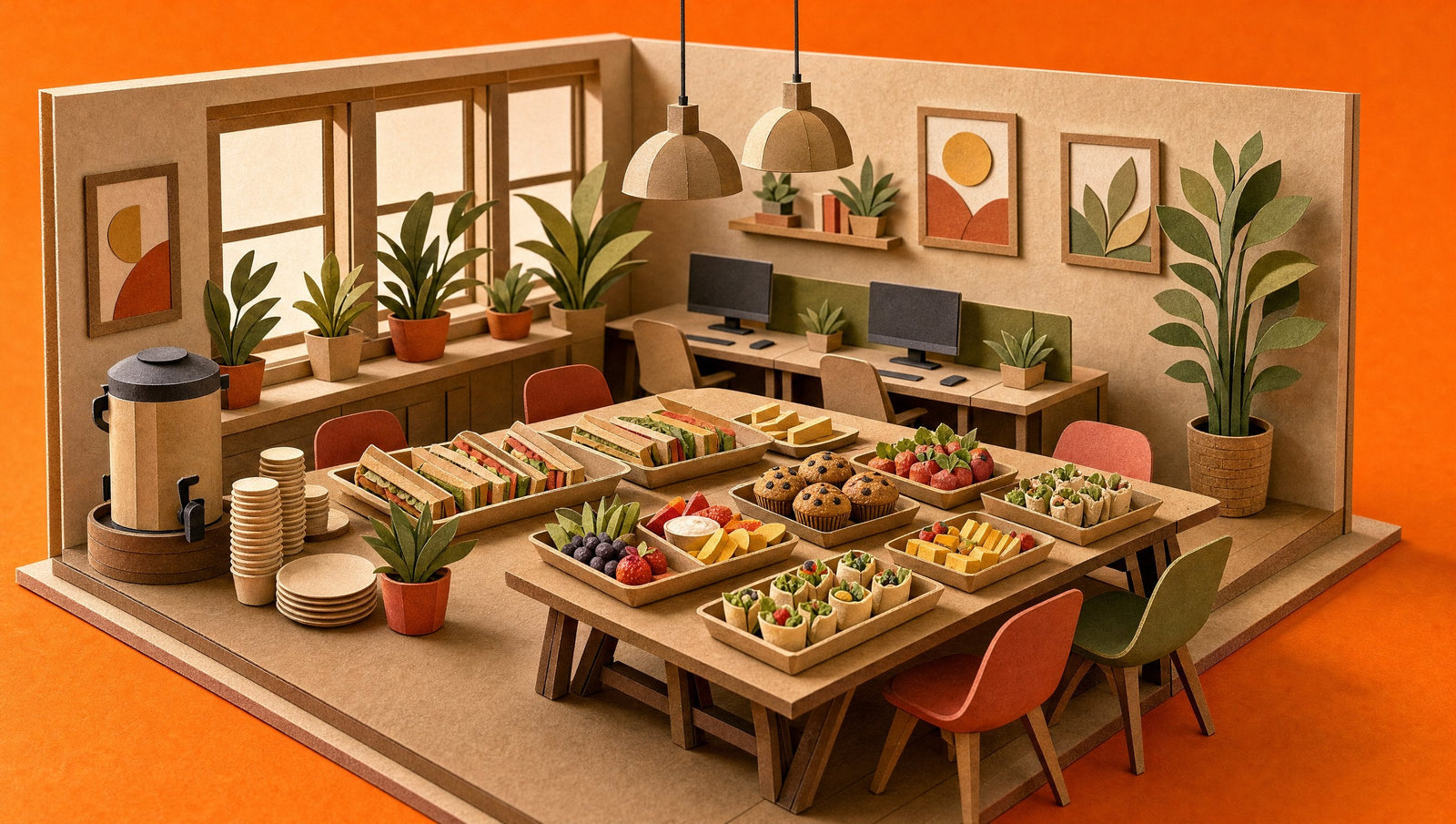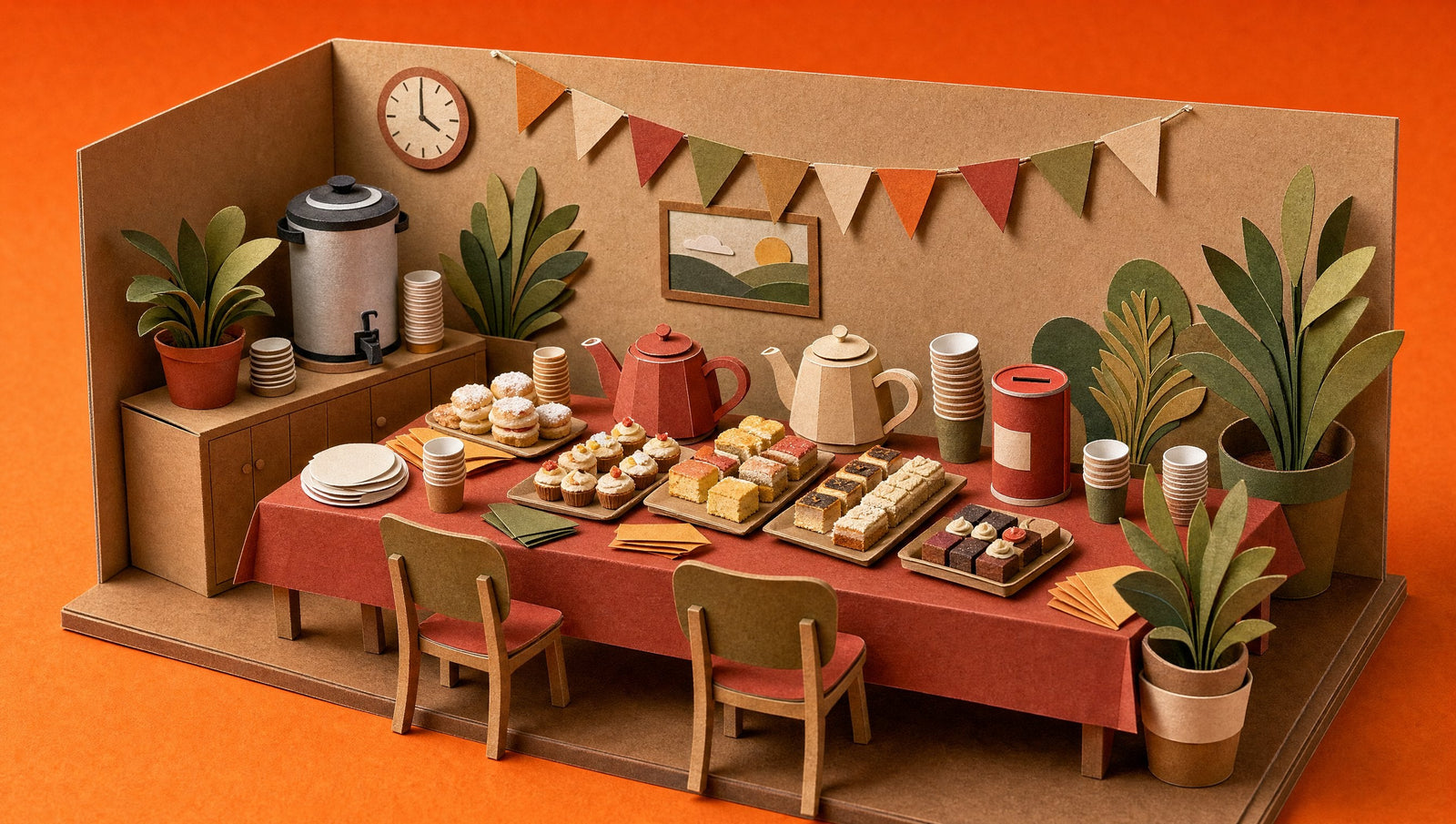
Why Sandwich Platters Is The Best Choice For Funeral Catering


A funeral is the one catering order where nobody wants to be making decisions. The call usually comes from someone standing in a car park with a phone in one hand, and it is rarely the widow or the son. It is a sister, a neighbour, a workmate from the department. The first thing they say is that they do not know how many people are coming. That is normal. We have been sending food to wakes out of our Fortitude Valley kitchen since 2005 and almost nobody knows the number.
Sandwiches have become the default for a wake, and not because they are the cheapest thing on a catering menu, although they are close to it. They are the default because of the shape of the afternoon. Everybody is standing. Everybody is holding a cup of tea. Everybody needs one hand free to shake somebody else’s or to put an arm around them. A sandwich half is the only food that fits that description, and once you have watched a hundred of these rooms you stop being surprised that it wins every time.
What follows is the practical side of it. How to guess the numbers when there is nothing to count, who should be standing at the door when the food arrives, why the platters will look untouched for the first hour, and what actually goes wrong when families cater a wake themselves.

In deciding what menu to offer to your extended family and guests, here are the things worth thinking about first.
1. The place where the funeral reception to be held
The venue decides more about the food than the menu does, and it is the question we ask before anything else. There are really only four kinds of room and each one changes the order.
A church or community hall. Usually the best of them, because there is a kitchen behind the servery, a cupboard of cups and an urn. The urn is the thing to check. A large hall urn takes thirty to forty minutes to come to the boil from cold, and nobody wants to be the person who switched it on as the cars pulled up. Somebody should turn it on before they leave for the service. The other thing to check is who holds the key. Halls are locked between bookings, and a delivery driver standing outside a locked hall at half past twelve is a problem that costs the family an hour.
A funeral home lounge. No kitchen, or a kitchenette with a kettle and a bar fridge. Everything has to arrive ready to eat and stay edible on a side table for two hours. This is the room where hot food goes wrong, and it is also the room where the staff are the most useful, because a funeral director’s team will take a delivery, sign for it and set it out without anyone in the family being troubled.
A club, pub or hotel function room. Ask one question before you order anything: are we allowed to bring food in. A great many venues will not permit outside catering, and finding that out on the day is an expensive way to learn it. Some will allow platters but not a hot buffet. Get the answer from the venue in writing if you can.
Somebody’s house. The constraint is fridge space, not table space. A domestic fridge that already holds a week of shopping will not take four large platters, and the platters are the thing that most needs to stay cool. Clear a shelf the night before, or plan the delivery for as close to the start as the day allows.
Wherever it is held, tell whoever is catering it what time the food will be eaten, not what time you would like it to arrive. Those are two different problems and only one of them is the kitchen’s to solve. Food for a two o’clock wake should be on the table and unwrapped before the cars come back from the cemetery, because unwrapping platters while people are walking in is the last job anybody wants.

A funeral wake usually takes place in a church hall or at the funeral home, though plenty are held in clubhouses, social halls and hotels. If the hall has a full kitchen, some of the food can be finished on site. If it does not, everything has to travel finished, which rules out most hot dishes and is the reason a lot of families end up ordering funeral catering as platters rather than as a meal.
One more piece of housekeeping that sounds trivial and is not. Give the caterer the name and mobile number of somebody who is not in the immediate family and who will not be at the graveside. A phone that rings in a chapel is a small cruelty, and the delivery driver has no way of knowing that the person on the order is currently carrying a coffin.
2. How many people will attend?
There is no RSVP for a wake. People who could not make the service turn up at the hall, people who came to the service go home, and the numbers are not knowable until the room fills. Anyone who tells you they can predict it exactly has not done many.
The working guide we use is that roughly two thirds of the people at the service come back to the reception, and that they stay between an hour and ninety minutes. From there the quantity is simple arithmetic. Allow one and a half rounds a head for a wake that lands over lunchtime, and one round a head for a mid-afternoon one where there is also cake or slice on the table. A round is one whole sandwich cut into four points, so one and a half rounds is six points, which is more food than it sounds like written down.
Then add ten rounds. Not because we would like to sell you ten more rounds, but because the cost of ten spare is small and the cost of running out is not. Leftovers from a wake are genuinely useful. The family will be back at the house that evening with nobody having cooked, and cold sandwiches at eight at night are the reason nobody goes to bed hungry. Ask for the boxes to be left rather than collected.
For a large group, a spread the room can serve itself from is the right shape, and a table that people can walk both sides of will clear twice as fast as one pushed against a wall. For a small group, twenty or thirty, a few platters put down on the table people are already sitting at works better than making anyone queue at all.
Expect the food to look untouched for the first half hour. Nobody eats at a wake until somebody else eats first, and then it goes all at once. The most common mistake we see is a family panicking at twenty past two because nothing has been taken, and putting more out. Wait. It empties.
3. Who will prepare the food?
When there is a death, people want a job. Bringing food is the job they reach for first, and it is one of the better things about the way this country handles a funeral. The problem is not generosity, it is logistics. Six casseroles arriving at a hall with no oven and a bar fridge is six casseroles that cannot be served.
The division that works: let people bring the things that keep and need nothing done to them. Slices, biscuits, a fruit cake, a lamington tray. Those sit on a table all afternoon and are better for it. Have the sandwiches catered.
The reason for that split is specific rather than commercial. Sandwiches are the item most likely to be made far too early. A tray built at seven in the morning for a two o’clock wake has seven hours to dry at the cut edges, and no amount of cling film fixes it once the bread has gone. In our kitchen the wake orders are made as late as the delivery run allows rather than as early as the roster allows, which is the whole difference between a platter that looks like food and one that looks like it has been waiting. It is a timing problem, not a skill problem, and a family kitchen on the morning of a funeral has no spare timing to give it.
The other reason is simpler. Nobody in the immediate family should be in a kitchen on the day. They will offer, and somebody should quietly take the job off them.

If the budget allows for the reception to be catered, take it. It is not extravagance. It is the removal of one whole category of things that can go wrong on a day when the family has no capacity left to absorb them, and it means there is no sit-down meal to organise, no serving to roster and nothing to clean at four o’clock when everyone has gone.
4. How much you want to spend
Set the budget per head rather than as a total, because the head count is the number that is going to move and the total will move with it. Then build the menu inside that figure instead of choosing dishes and adding up afterwards.
Spend it on quantity rather than variety. Four fillings that everybody eats will beat eight that half the room walks past, and a wake is not the room in which to be interesting. Chicken, ham, egg and a roasted vegetable will feed any group in Brisbane without a single person having to think about it.
The practical numbers on our side, because funerals do not give much notice and cost surprises are the last thing anyone needs. Orders placed by 4pm go out the next day. There is no last-minute surcharge, which matters because a funeral date is often confirmed with two days’ warning. Delivery starts at $19 on orders over $150 and reaches more than 50 Brisbane suburbs, and Saturday is charged at the same rate as a weekday, which is worth knowing given how many services fall on a Friday or a Saturday. If somebody is driving past anyway, pick-up from our Knapp Street kitchen in Fortitude Valley opens at 7am.
One quiet piece of advice about who pays. It is very often a friend or a workplace that settles the bill and the family that reimburses later, or does not. If you are the friend, put the order in your own name and give the caterer your number. It saves the family a phone call they should not have to take.

Sandwich platters are the most common thing we send to a wake, by a long way. These are the reasons why.
1. Budget-friendly
Per head, nothing else comes close for something that is genuinely a meal rather than a snack. But the saving is not really in the ingredients, it is in everything a sandwich does not need. No chafing dishes, no urns of gravy, no serving staff, no window of time in which the food is at its best and after which it is not. A platter is as good at three o’clock as it was at one, and it requires nobody to stand behind it.
There is a variety of sandwiches that costs very little more than the plain ones, so there is no reason to send a dull table. Slider buns and mini baguettes read as more of an occasion than sliced bread without changing the price much, and a tray of mini pies and sausage rolls alongside gives the room something warm to start on without anyone needing to run an oven for two hours.
If you are pricing it up, the honest comparison is not sandwiches against a hot buffet. It is sandwiches against a hot buffet plus the equipment hire plus the person minding it, and once those are in the column the gap is wide enough that most families stop looking.

2. Personal taste
A wake is the one event where you cannot ring around and ask people what they eat. There is no invitation list to work from and it would be an odd phone call to make. So the dietary requirements have to be guessed, and guessed generously.
The proportions that have served us well for a mixed Brisbane room: about ten to fifteen per cent gluten free, and about a fifth of the total vegetarian. Order more vegetarian than you have vegetarians, because in a room of any size the vegetarian platter is the one that empties first and it is not the vegetarians emptying it. There are all-meat options too, and a table with a decent roast beef on it will not go unnoticed by the men standing near the door.
Then mark them, or keep them on a platter of their own at one end. This is the part people skip. An unlabelled mixed platter means the coeliac guest simply does not risk it and eats nothing, and at a funeral they will not make a fuss about it either. Our product names carry dietary icons so you can see what you are ordering before it arrives, but on the day it is the table that has to say it, not the invoice.
3. Keep it longer and quick to order
Brisbane gets hot, and most food that is sent to a hall is on a losing clock from the moment it leaves a kitchen. Sandwiches are the exception. Wrapped and kept out of direct sun, a platter will hold for the length of a wake without a fridge, an urn or anybody watching it.
Two things make the difference. Leave the wrap on until people are actually arriving rather than taking it off when the platters land, because bread dries from the moment it meets moving air. And keep the table away from the window. A hall in February with afternoon sun coming through glass will do more damage in twenty minutes than three hours in the shade. If the day is genuinely hot, eat the wet fillings first. Egg and anything bound with mayonnaise sits less happily than roast beef or a roasted vegetable.
Quick to order is the other half of it, and it matters more at a funeral than at any other event we cater. There is rarely more than a week between the death and the service, and often the venue is only confirmed a day or two out. A platter order can be placed by 4pm and delivered the next morning, made by hand that same morning, with nothing to prepare at the other end. Very little else on a catering menu can be turned around that fast without the price going up for the privilege.
4. No mess
The test for wake food is whether it can be eaten by a person who is already holding a cup of tea. If it needs a fork, it needs a second hand, and it will end up abandoned on a windowsill or a piano lid. Sandwich halves pass the test. So do sausage rolls and small pies. Anything with a sauce that can drip does not.
Halls are carpeted more often than not, and church halls in particular are lent rather than hired. Whatever is dropped is dropped on somebody’s floor. Cut sandwiches into halves or points rather than serving them whole, put a bin bag near the door rather than in the kitchen, and skip anything that needs a plate to be eaten standing up. Clean-up should be a matter of folding a few boxes flat, which at four o’clock on the day of a funeral is about all anyone has left in them.
Some Sandwiches Ideas For Funeral Catering
These are the four we send to wakes most often. Any of them can be ordered by 4pm for the next day, and all of them are made by hand in Fortitude Valley the morning they go out.

Sub sandwich box. The heartiest of the four, and the one to order when the wake is at lunchtime and the room is mostly men who have taken a day off work. Subs read as a proper feed rather than as finger food, so they suit a reception that is really lunch. Count them as more than a round each when you are working out numbers.

Large triangle sandwich platter. The one most wakes are built on. Soft white and wholemeal, cut into triangles, mixed fillings spread across the platter so nobody has to hunt for the one they want. This is what to order when you do not know the room, which at a funeral is nearly always.

Sourdough sandwich box. A firmer crumb, which means it holds a wet filling better and stands up to a long afternoon on a table. If the food has to go out early and sit until the cars come back, this is the safer bread.

Medium triangle sandwich platter. The right size for a small wake at a house, or for topping up a larger table without committing to another full platter. Most families order one of these alongside the large ones rather than instead of them, because it is the easiest way to add a dozen serves without over-ordering.
You can see the rest of the catering sandwich range if you would like to mix breads across the table, and the full funeral catering range sits alongside it.
A funeral wake is an informal thing. It is a room of people who have come back from a cemetery to remember somebody, and the food is not the point of it. That is exactly why it should be the part nobody has to think about. Catering the reception does not make the day easier, because nothing does, but it removes one job from a list that the family should not be holding at all, and it means the afternoon can be spent on the thing it is for.
If you are the friend or the colleague making the call on their behalf, you already know the most useful thing you can do is decide something for them. Pick the platters, give us a delivery address and a number that is not theirs, and let them arrive to a table that is already set.

Leave a comment
Comments will be approved before showing up.