How to Host Australia's Biggest Morning Tea This Year

Australia’s Biggest Morning Tea is the Cancer Council’s fundraiser, and it is the one charity event an ordinary workplace can actually pull off. Boil the urn, put food on a table, ask people to give what they would have spent on a coffee. There is no run, no auction night, no committee.
We cater a lot of them out of our Fortitude Valley kitchen, which means we watch the same three things go wrong every year: too much food ordered, not enough cups bought, and a spread laid out a full hour before anyone is allowed to leave their desk. None of those are catering problems exactly. They are timing problems, and they are the difference between a morning tea that raises a few hundred dollars and one that raises a few thousand.
What follows is the whole thing from the catering side. What the event is, how to plan one that people actually turn up to, what to put on the table, and the handful of small decisions that decide whether the money gets raised or the morning simply happens.
Key Takeaways
- Hosting a Biggest Morning Tea funds Cancer Council research, prevention programs and support services. Registering costs nothing and the free host kit does most of the organising for you.
- Order three small pieces a head, not five. A morning tea is eaten in about twenty-five minutes, and leftovers are a cost rather than a kindness.
- Theme, invitations and decorations matter far less than two numbers: your RSVP count, and the time the food is actually eaten rather than the time it is delivered.
- Raffles, a baking competition, employer matching and an online page will out-raise a tin on the table several times over, because most people no longer carry cash.
- Ask a manager or a supplier to cover the catering. If the food is paid for separately, every dollar that goes in the tin goes to the Cancer Council.
Introduction
Australia’s Biggest Morning Tea is a community event where people get together over tea and something to eat, and pay for the privilege. The money goes to the Cancer Council’s support services, research projects and prevention programs. That is the entire mechanism, and its simplicity is why it has lasted.
With around 150,000 Australians diagnosed with cancer each year, the money raised at these mornings matters to a great many families. Almost everyone in a room of thirty has a reason to be standing there, which is worth remembering when you are deciding how hard to push the donation tin. Usually you do not have to push at all.
Hosting one does three things at once. It raises money for research and support services. It gives a workplace or a street a reason to stand in the same room for half an hour, which is rarer than it used to be. And it turns a private thing that a lot of people are carrying quietly into something the room can acknowledge without anyone having to make a speech about it.

What is Australia's Biggest Morning Tea?
It is an annual fundraiser run by Cancer Council Australia. You register as a host, you pick a date, you invite people, and you collect donations instead of charging for the food. The official day falls in late May, but you can host earlier or later if that works better for your team, and plenty of offices run theirs in June once the end-of-financial-year rush has settled.
Registration is free and gets you a host kit in the post: posters, bunting, a donation tin, and a fundraising page set up under your name. The kit is genuinely useful, mostly because it removes the two jobs people procrastinate over, which are designing something and working out how to take money.
The scale is what makes it work. A single morning tea for twenty people raising two hundred dollars is unremarkable on its own. Thousands of them on the same fortnight is not. That is also why nobody should feel their event is too small to bother registering — a kitchen table with six people around it is exactly what the campaign was built for.

How Your Participation Makes a Difference
Every dollar raised goes towards cancer research, prevention programs and support services for patients and their families. That includes the unglamorous work — screening programs, information lines, transport and accommodation for regional patients who have to travel for treatment.
Survival rates have moved from around 49% in the 1980s to about 69% today. That figure did not shift because of one discovery. It shifted because of thirty years of incremental research funded in large part by exactly this kind of money.
Here is the part worth doing on paper before you order anything. If forty people come and each puts in ten dollars, that is four hundred dollars raised. If you have spent two hundred and fifty on the food out of the same pot, you have raised a hundred and fifty. Every host we talk to who ends up disappointed made that mistake: they funded the morning tea out of the donations. Get the catering covered separately, by a manager, a supplier or a whip-round among the organisers, and the tin stays whole.
Planning Your Morning Tea Event
Start about two months out. Not because the planning takes two months — it takes an afternoon — but because you need that long to get a date into other people’s calendars before the calendars fill up. The single biggest cause of a thin morning tea is a date announced ten days ahead.
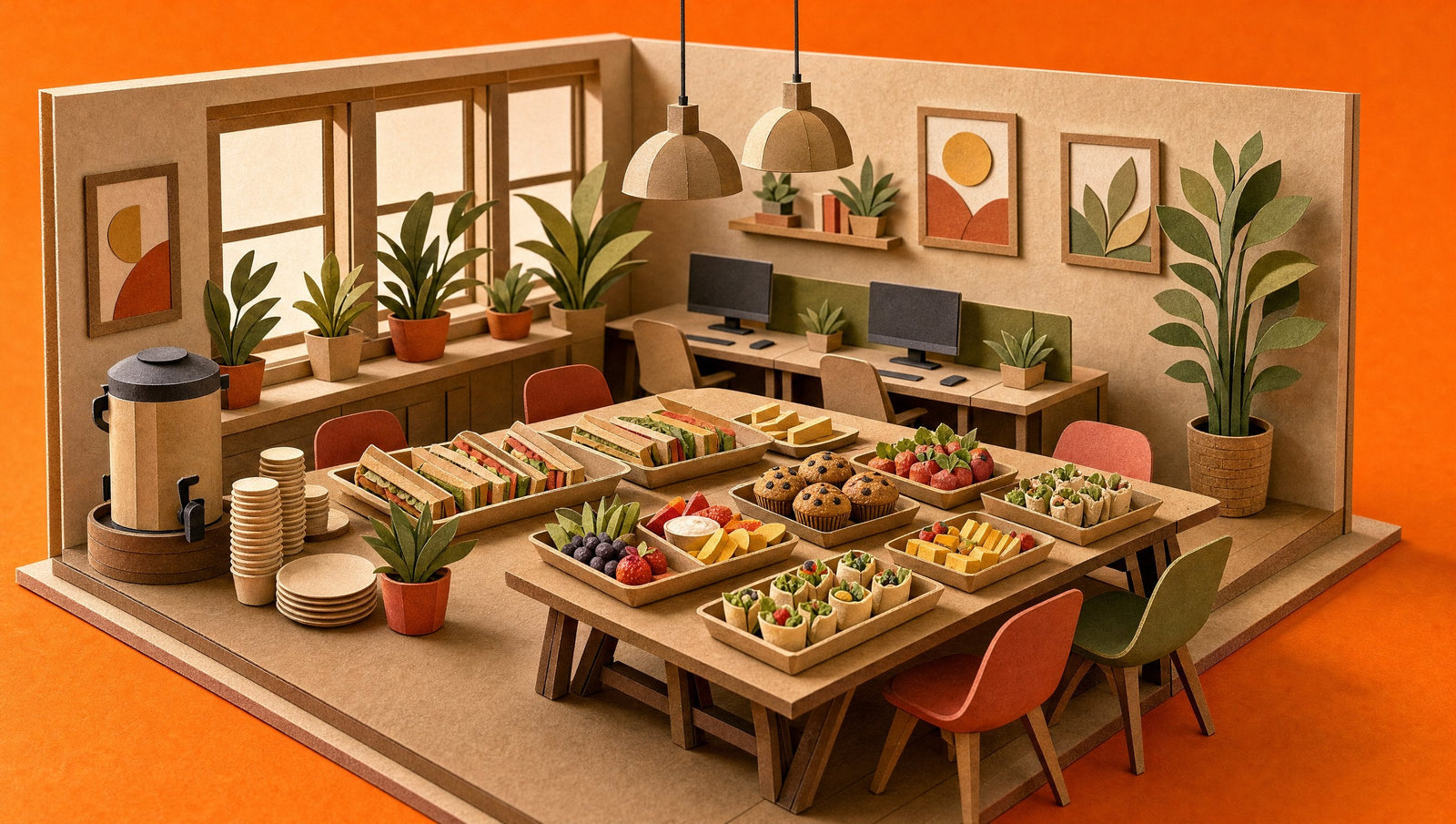
Pick the venue first, because it decides everything downstream. A break room, a meeting room with the table pushed to one side, a park, a driveway. What you are looking for is a flat surface roughly two metres long and a power point within reach of it, and whether people can get to it and back in fifteen minutes without leaving the building.
Then the numbers. Work off the RSVP count, add ten per cent for the people who wander in when they smell it, and order three small pieces a head. Not five. A morning tea sits between breakfast and lunch, and a scone, a slice and a small sweet is already more than most people eat at eleven in the morning. Our standard morning tea package is built to that ratio for exactly this reason.
The other number nobody asks for is time. Tell whoever is catering the time the food will be eaten, not the time you would like it delivered. Those are two different problems and only one of them belongs to the kitchen. A tray that arrives at nine for a ten-thirty morning tea has ninety minutes to dry out on a bench in an air-conditioned office, which is more than enough to take the edge off a scone.
A short list of the things that actually have to be decided: the date and the room, the headcount, the food and who is paying for it, how you are taking donations, and one person whose job is to stand near the tin. That last one sounds trivial. It roughly doubles what gets collected, because a tin nobody is standing next to reads as decoration.
Do the fiddly work the night before. Label the trays, count out the cups, put the milk where you will find it, write the dietary cards. On the morning you want to be talking to people, not hunting for a knife.

Choosing a Theme
A theme is not compulsory and it is not decoration for its own sake. Its real job is to make the invitation easy to write and to give people a reason to talk to each other when they arrive.
The easiest ones are colours. Yellow is the obvious choice given the daffodil, and it is also the cheapest theme in the world to execute: paper napkins, a bunch of flowers from the corner shop, and a lemon slice on the table. A garden tea party works if you have any outdoor space at all. Vintage tea, where everyone brings a cup from home, costs nothing and solves the crockery problem in one move.
From the food side, a colour theme is far simpler to deliver than a concept. Icing takes a colour perfectly well. A pirate ship does not fit on a tray. If you want the theme to show up in what people eat, pick something a decorator can pipe and a room can eat standing up.
Whatever you pick, check it against the guest list rather than your own taste. A costume theme is a gift in some workplaces and a small act of cruelty in others, and the point of the morning is that people come.
Sending Invitations
Send them twice. Once about three weeks out, so the date gets into calendars, and again two days before, because the first one has been forgotten by everyone who is not organising it. The reminder is the one that fills the room.
Digital invitations do the administrative work for you — a calendar invite, an e-vite or a private group all track RSVPs, and you can attach the fundraising page link so people who cannot come are still able to give. Handwritten cards are lovely and worth doing for the handful of people you actually want to make an effort for, but do not hand-write forty of them and then have no way of knowing how many are coming.
Put two things on the invitation that most people leave off. The first is what the money is for, in one sentence, because a stated cause collects more than an unstated one. The second is a request for dietary requirements, with a reply-by date. That answer is what determines the trays we send. Gluten free, dairy free and vegetarian items carry icons in the product names on our site, so once you know the numbers it takes about a minute to get the mix right — and it is a great deal easier than watching one person stand at a table of food they cannot eat.

Setting Up for Success
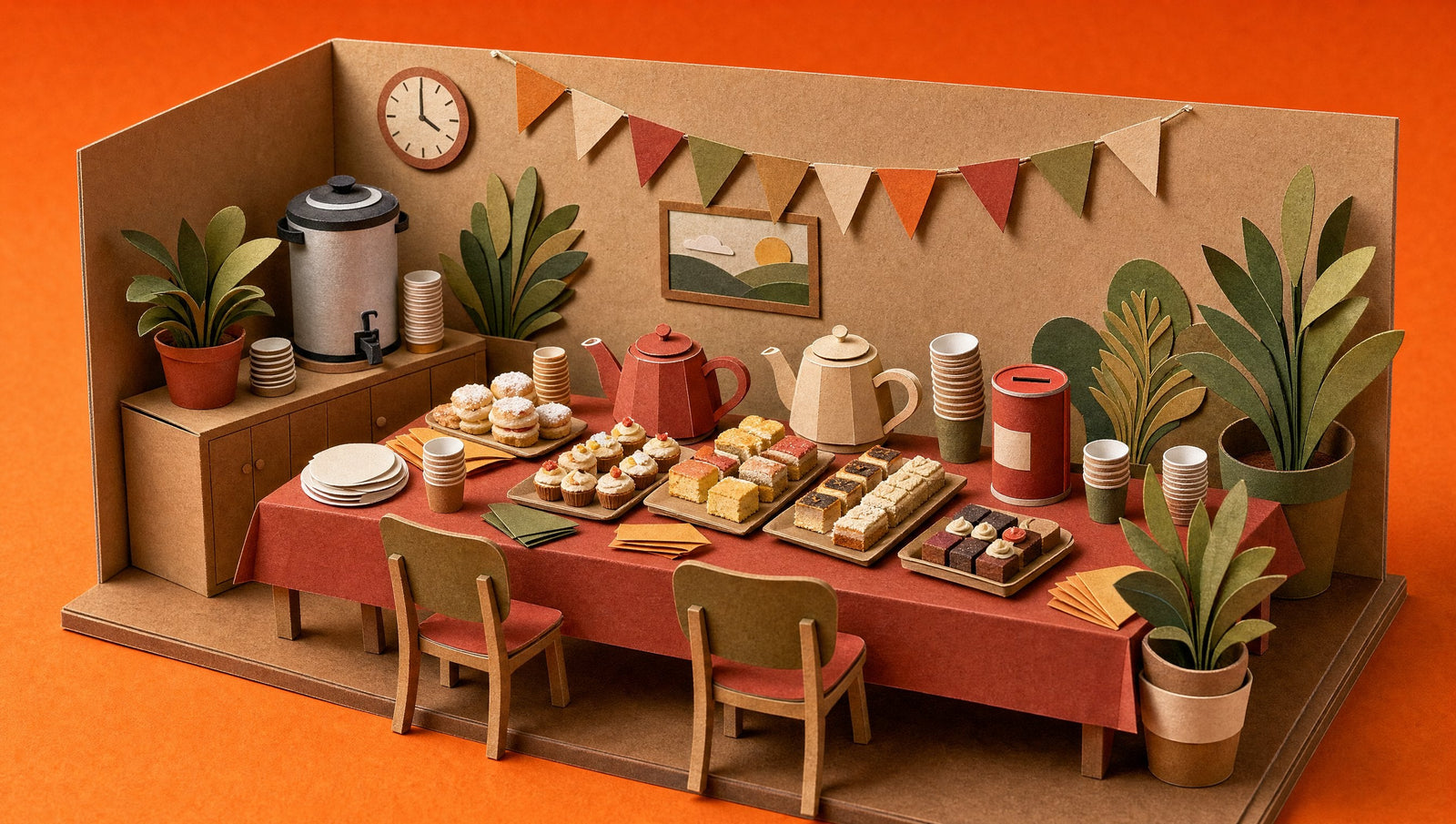
The host kit gives you posters, bunting and a tin. Put the bunting up the night before and the posters where people queue, which in most offices is the kitchen doorway rather than the wall you were thinking of.

Then the practical set-up, which nobody writes down and everybody gets wrong once:
- Fill and switch on the urn well before you think you need to. A large urn takes the better part of half an hour to come up from cold, and a morning tea with no hot water at the start of it never really recovers.
- Buy half again as many cups as guests. People put a cup down, lose it, and take another. One cup a head is always wrong.
- Allow about a litre of milk for every twenty people, and put it out in two jugs at opposite ends of the table so there is no single queue.
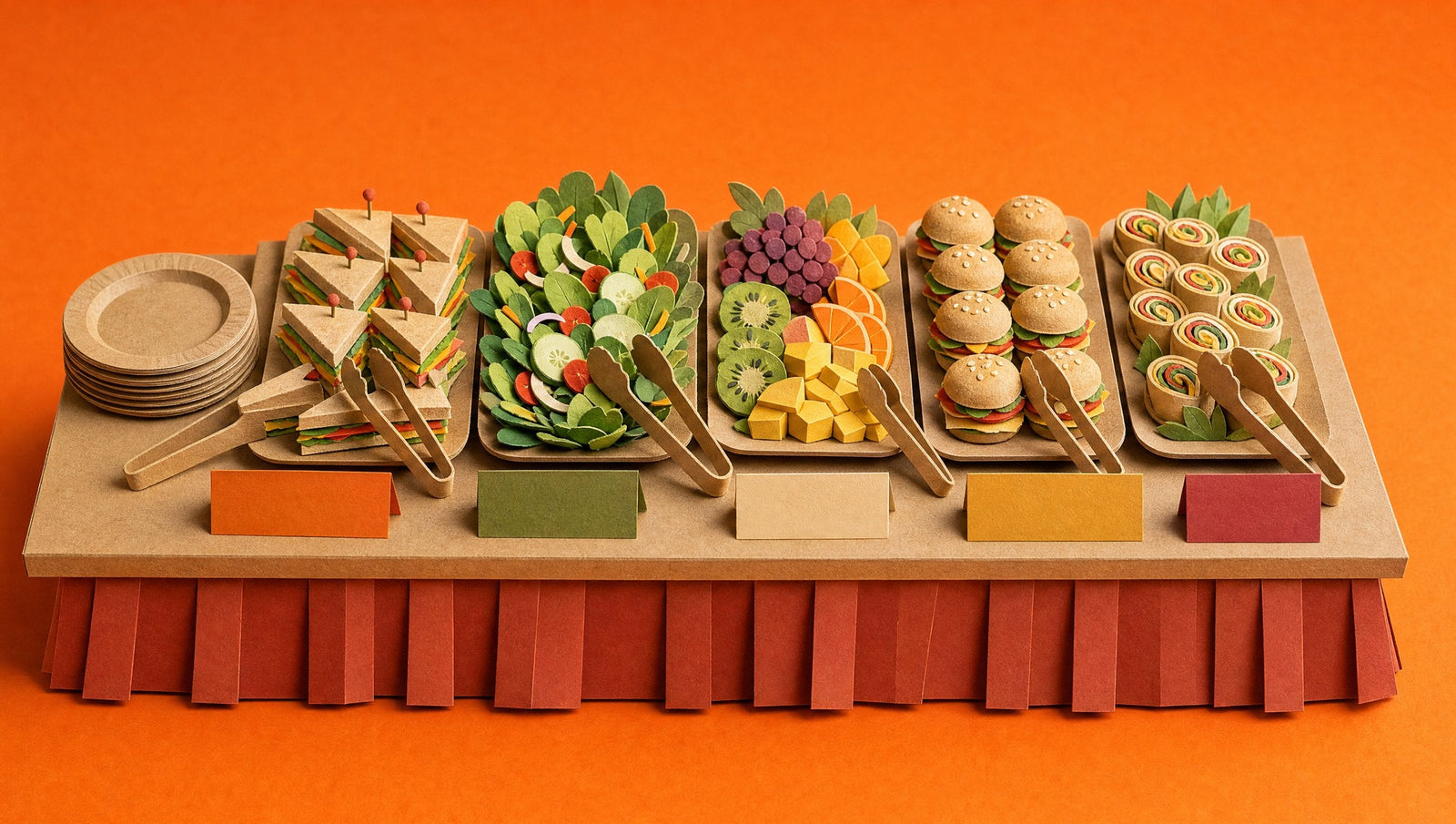
- Lay the food along both sides of the table rather than in one line. A single-sided table makes one queue and a twenty-five minute event turns into ten minutes of standing and fifteen of eating.
- Keep everything to one hand. Anything needing a plate and a fork does not get eaten in a room with no chairs.
- Cut the slice trays smaller than feels right. Twenty-four pieces out of a tray instead of twelve means more people try more things, and far less goes in the bin at noon.
- Label every tray, including the ordinary ones. A card saying what something is saves the same question being asked thirty times.
Leave the wrapping on until people are in the room. Scones are at their best within a couple of hours of coming out of the oven and dry out quickly once uncovered, and anything with cream on it has about ninety minutes in a Brisbane office before it stops looking like it did on the tray. If you are serving scones with jam and cream, send them out separately and let people build their own — assembled ahead of time, the cream weeps into the scone and softens it within twenty minutes.
Heat is the other thing to plan around. Buttercream is comfortable up to about twenty-five degrees. If your only spare table is the one in the sun by the window, put the sandwiches and the slices there and keep anything iced in the coolest corner of the room.
Fundraising Tips and Ideas
The tin on the table is the floor, not the ceiling. Most people no longer carry cash, so a morning tea that relies on coins collects what happens to be in a few pockets. Everything below exists to get past that.

- Share the fundraising page before the event, not after. The people who cannot come are often the ones most willing to give, and they will not chase you for the link.
- Set a public goal and say where it is at, out loud, halfway through the morning. A number on a whiteboard moves more money than any amount of encouragement.
- Get the catering sponsored so the tin stays whole. Managers say yes to this far more often than people expect, because it is a small, visible and easily approved amount.
- Take a photo early, while the table is full and the room is busy. It is the only useful asset you will have when you post the link that afternoon.
Raffles and small auctions do the heavy lifting. Local businesses will often donate a prize for the cost of being asked, and a raffle converts the people who came for the free food into people who gave twenty dollars without feeling they were asked to.
Fun Activities and Games
You want one activity, not four. A morning tea has about twenty-five minutes of real attention in it, and anything that takes longer than that ends with a room slowly draining back to their desks.

The ones that work in a short window are the ones people can do while holding a cup. Themed trivia read out from a phone, with a gold coin an entry. Guess the number of jellybeans in the jar, which sounds like a school fete and out-earns almost everything else. A raffle drawn on the day, so nobody has to be tracked down later.
A baking competition is the best of them if you have a week to run it, because it starts the fundraising days before the event. Charge a small entry fee, let the room vote with coins rather than hands, and the voting itself becomes the fundraiser.
If the morning tea is a workplace one, a corporate morning tea logo cake gives the room a centrepiece and gives you the photograph for the internal email afterwards. Worth knowing before you plan the morning around it: anything decorated needs two to three business days with us, because the icing has to be made, coloured and set by hand. It is not a next-day item, and the week of the event is too late to decide.
A tea tasting is the quiet option and better than it sounds. Four or five leaf teas, small cups, a gold coin to taste — it gives people something to talk about and it costs almost nothing to set up.
Online Fundraising Options
Your registration comes with an online donation page, and it will almost certainly raise more than the tin. Put the link on the invitation, in the calendar entry, in your email signature for the fortnight, and in the post you write afterwards.

A virtual morning tea is a real option and not a consolation prize. If half the team works from home, book half an hour, send everyone the link, and let people bring their own cup. The fundraising side works exactly the same and the donation rate is often better, because giving online is easier than finding a twenty.
If you want the remote half of the team to have the same morning, food can go to more than one address. We deliver across more than fifty Brisbane suburbs, from $19 on orders over $150, and Saturday runs at the same rate as a weekday if the morning tea is a weekend one at somebody’s house.
An online auction is worth running only if you have a genuinely good item. Two or three real prizes beat twenty donated bits and pieces, and a short auction with a hard finish beats a long one that quietly expires.
Matching Donations
Ask your employer whether they will match what the team raises. A great many will, and the request is easier to approve than people assume because it is capped by definition — they cannot be asked for more than the room gives.
Ask early, before the event rather than after, and announce the match on the day. A room that knows every dollar is being doubled gives differently to a room that finds out afterwards.
If matching is not on the table, ask for the catering instead. It is a smaller number, it comes out of a different budget, and it has the same effect on the total: the food is paid for and the donations go straight through.
Banking Your Funds
Bank it the same week. Cash sitting in a tin in someone’s bottom drawer is the one part of this that reliably goes wrong, and the host kit has the instructions for paying it in against your registration so it lands on your page rather than in a general pool.

Count it with two people and write the number down before it leaves the room. Not because anybody is dishonest, but because a total that has been counted once is a total nobody can confirm, and you will want to announce it.
Then tell the room what they raised. A final number, sent that afternoon while the morning is still fresh, is the single best thing you can do for next year’s event — and it is the moment when the people who could not come tend to click the link.
Stories from Top Fundraisers
The people who raise the most are rarely the ones with the biggest budgets. They are the ones with a reason they are willing to say out loud. Marian from Madame Ma’s Doggy Daycare hosts hers to help reduce the impact of cancer on her community. Elly hosts one in memory of her father, Jack, who had small cell lung cancer.
Jason Roberts runs the morning tea at LiveBetter Community Services in Orange. Scott started hosting his to say thank you for the advice his family were given when his mother was diagnosed with bowel cancer.
What those events have in common is not scale. It is that somebody said, in one sentence, why the morning was happening — and a room that knows the reason gives more than a room that has been told there are scones in the break room. If you take one thing from the hosts who do best, take that. Write your sentence before you write the invitation.
Why Hosting Matters
Hosting a morning tea funds practical and emotional support for people living with cancer, and it funds prevention work that most Australians benefit from without ever noticing. The SunSmart Schools and Early Childhood program alone reaches more than two million children, which is the sort of thing that only exists because a great many small events kept paying for it.

There is a second reason, and it is not on any fundraising page. A morning tea gives people a legitimate excuse to say something they have been carrying quietly. We have delivered to plenty of these, and the room is almost always different afterwards to the way it was at ten o’clock.
It also costs remarkably little to be the person who organises one. An afternoon of planning, a headcount, an order placed the day before. If you have been waiting for the year you have time to do it properly, this is roughly as small as the job ever gets.
Summary
Australia’s Biggest Morning Tea works because it asks for very little and turns it into something considerable. Register, pick a date far enough out that people can come, invite them twice, and keep the food simple enough to eat standing up.
The catering side comes down to four numbers: three pieces a head, one and a half cups a head, a litre of milk per twenty people, and the time the food is actually eaten. Get those right and the morning runs itself, which leaves you free to do the part that raises the money — standing near the tin and telling people why you are doing it.
When you are ready to order, everything is made by hand in our Fortitude Valley kitchen. Order by 4pm and it arrives the next day with no last-minute surcharge, delivery from $19 on orders over $150 across more than fifty Brisbane suburbs, or pick up from 7am at 159 Knapp St if you would rather carry it in yourself. Decorated cakes and cupcakes need two to three business days, so order those first and the rest whenever the RSVPs settle.
Frequently Asked Questions
How do I register for Australia's Biggest Morning Tea?
Register free on the Cancer Council website and you will be sent a host kit with posters, bunting, a donation tin and a fundraising page under your name. Register as soon as you have a date, even a rough one — the kit takes time to arrive in the post, and the fundraising page is useful from the day it exists rather than the week of the event.
What if I can't host an event in person?
Host a virtual one. Book half an hour, send the link, let everyone bring their own cup, and set up an online donation page so people can give without cash changing hands. Virtual morning teas often collect more per person than in-person ones, because donating online takes ten seconds and finding a note in a wallet does not. If you want the team to eat the same thing, food can be delivered to several addresses on the same order.
How can I maximize my fundraising efforts?
Three things, in order of how much they return. Get the catering paid for separately so every donated dollar goes through. Ask your employer to match the total, and announce the match on the day rather than afterwards. Run one raffle or competition with a real prize, drawn while everyone is still in the room. After that, share your page before the event, not only after it, and post the final number the same afternoon.
What kind of themes can I choose for my morning tea event?
Colour themes are the easiest to pull off — yellow for the daffodil, or a floral scheme that costs the price of one bunch of flowers. A garden tea party works wherever there is outdoor space. Vintage tea, where everyone brings a cup from home, solves the crockery problem and starts conversations. Pick something a decorator can put on a cake and a guest can eat standing up, and check it suits the room before you commit.
How do I bank the funds raised from my morning tea event?
Follow the instructions in your host kit so the money is credited against your registration and shows up on your fundraising page. Count the cash with a second person and write the total down before it leaves the room, then bank it the same week. Cash left in a drawer is the part of this that most often goes astray, and the total is also the thing you want to tell everyone who came.

Leave a comment
Comments will be approved before showing up.