Top 10 Tips on How to Increase Productivity in the Workplace

We are not a productivity consultancy. We are a bakery in Fortitude Valley that has been delivering food into Brisbane offices since 2005, which means we see the working day from an unusual angle — from the goods lift at half past ten, from the break room at two, from the loading dock of a building where nobody on level nine has noticed the food has arrived.
Do that for twenty years and patterns turn up. The same floors run out of steam at the same hour. The same meetings run over by the same fifteen minutes. The same tray comes back half full for the same reason. None of that makes us experts on deep work. It does mean that when an article tells you to take regular breaks and eat properly, we can say what that actually looks like at a desk in a Brisbane office on a Tuesday, which is a different thing from saying it is a good idea.
What follows is the usual set of tips for getting more done — your best hours, your list, your distractions, your workspace, your habits — with the parts we have real evidence for filled in properly instead of waved at.
Increase Productivity - Key Takeaways
- Find the two or three hours a day when you are genuinely sharp and spend them on the hardest thing. Admin will fill those hours if you let it, and admin runs perfectly well at half power.
- Rank the list. Fourteen things written down in the order they occurred to you is not a plan, it is a record of interruptions.
- Batch anything repetitive, including the office jobs nobody counts as work. A standing weekly food order turns fifty-two decisions a year into one.
- Breaks are structural, not a reward. A floor that eats at its desks does not get a break; it gets a slower hour with crumbs in the keyboard.
- What is on the table at half past ten decides what the room is like at three. A tray of sweet slices and nothing else buys a good twenty minutes and costs you the afternoon.
Identify Your Most Productive Hours
Everyone runs on their own clock. Some people do their best thinking before nine and are ordinary by two. Others do not properly start until mid-afternoon and are still going at seven. Finding your own pattern is not self-knowledge for its own sake. It is so you stop spending your sharpest ninety minutes on something any hour of the day could have handled.

Find it by observation rather than assumption. For two weeks, note at the end of each hour how the work felt — sharp, adequate, or a slog — and what you were doing at the time. Two weeks is enough for the shape to show. Most people are surprised by at least one thing, and usually it is that the hour they had written off as dead is fine while the hour after lunch is not.
Then protect it. Block the calendar, put the hard thing inside the block, and push the admin into the flat hours where it belongs. Booking a room is admin. Chasing an invoice is admin. So is ordering the food for Thursday, and so is anything that arrives with the words “just checking” in front of it. None of that needs you at your best.
Organise the catering on exactly that principle: place the order in a low hour, and place it the day before rather than on the morning it is needed. Our cut-off is 4pm for next-day delivery, with no last-minute surcharge, which means yesterday-you can hand today-you a solved problem for the price of five minutes at the end of a flat afternoon. Consult the team about dietary requirements and preferences first so the order is made once rather than amended twice. Some popular catering ideas are: finger food warm and cold, sandwiches, pastries and Vietnamese food, alongside a variety of beverages such as juices, soft drinks and coffee to cater to everyone’s preferences.
One more thing about the office day, and we have the delivery book to back it up. The two most requested delivery slots across Brisbane are half past ten and half past two. Nobody coordinated that. Those are the two points where a floor’s attention gives out, and offices book food around them without ever having consciously worked out why. If you have no idea where your own dips sit, start by assuming they are somewhere near there and check.
Prioritize Tasks with a To-Do List
A list only helps if it is ranked. An unranked list of fourteen items does not tell you what to do next; it just makes you feel behind on all fourteen at once. Two methods do the ranking well, and they suit different kinds of people.
The Eisenhower Matrix, popularised by Stephen Covey in The 7 Habits of Highly Effective People, sorts everything into four boxes: urgent and important, important but not urgent, urgent but not important, and neither. Do the first, schedule the second, hand off the third, and delete the fourth without ceremony. The fourth box is nearly always fuller than people expect, and clearing it out is the fastest hour anyone will spend on their own workload.
The Most Important Tasks method is blunter and works better for a lot of people. Pick three things the night before. If those three are done, the day counts, whatever else landed on it. The value sits in choosing them while yesterday is still fresh, rather than at nine the next morning when the inbox has already made the choice for you.

There is a third way of ranking that a kitchen teaches you, and it does not appear in either method: sort by how long the work stays good.
Our morning list is not ordered by importance. It is built backwards from the time the food has to be out the door, and then reordered by how quickly each thing deteriorates once it is made. Bread first, because dough proves on its own schedule and cannot be hurried by anyone’s deadline. Sandwiches last, because a sandwich has a small number of genuinely good hours in it, and every one you spend sitting on a bench is one you do not get back at the other end. That is also why our platters go out later in the morning than a lot of kitchens would bother with. Made at five for an eleven o’clock meeting, they would have six hours to go wrong.

Apply the same test to a workday and some of your urgent tasks quietly demote themselves. The thing that is urgent but does not decay can sit until three. The thing that will be stale, irrelevant or somebody else’s problem by Friday cannot. Perishability is a better sorting rule than urgency, because urgency is mostly a description of how loudly something was asked for.
Limit Distractions
The standard advice is right as far as it goes, and it is worth doing before anything more elaborate.
- Silence every notification you did not personally ask for. Almost none of them were chosen; they arrived switched on.
- Deal with email and messages at two or three fixed times, and keep it shut in between.
- Use a website blocker during your protected hours rather than relying on willpower, which is a finite and badly rationed resource.
- Work somewhere the interruptions cannot physically reach you, even if that is only a booked meeting room for ninety minutes.
- Replace the scrolling with something that is actually restful — a walk, a coffee away from the desk, a conversation with somebody about something that is not work.
Work in sprints if it suits you. The Pomodoro Technique — twenty-five minutes on, five off — has survived this long mostly because it is short enough that nobody argues with it.
What that list misses is the largest scheduled interruption in most offices, which is not a phone. It is catering arriving at the wrong time.

A delivery that lands at ten for an eleven o’clock meeting pulls people away from their desks twice: once to receive it and once to eat it. It also leaves the food standing in the open for an hour, which is where most of the complaints about catering quality are actually born. Tell whoever is catering the time the food will be eaten, not the time you would like it to arrive. Those are two different problems and only one of them belongs to the kitchen.
Then put it in a room people have to walk to. A tray sitting on the bench beside the desks is a distraction with no end point — it pulls the same thirty people past it eleven times each. The identical tray in a break room is a fifteen-minute break with a start and a finish, which is the thing you were trying to buy.
Batch Similar Tasks Together
Switching between unlike jobs costs more than people think. The expensive part is not the minute you lose in the swap. It is the two or three minutes at the other end where you sit re-reading something you had already worked out once.

Batching is how a commercial kitchen has always worked, for exactly the same reason. You do not make one sandwich. You lay out two hundred bases, spread all of them, fill all of them, then close and cut all of them. Every changeover has a cost that appears on no clock and shows up very clearly in how long the morning takes. A kitchen that jumps between three jobs finishes all three later than a kitchen that finishes them one at a time, and the food it turns out is less consistent as well, because consistency is mostly repetition.
At a desk that means all the email in two blocks, all the calls in one afternoon, all the approvals in a single sitting, and all the small accumulated admin in one ugly half hour on a Friday. It is not a pleasant half hour. It is considerably shorter than the same work spread across five days.
Batching also works across weeks, not just within a day, and this is where offices leave the most time on the table. A recurring order — the same platters every Tuesday, the same morning tea on the first Friday of the month — takes a decision that would otherwise be made fifty-two times and makes it once. We have offices running the same standing order for years. Nobody on those floors has spent a minute thinking about Tuesday lunch since it was set up, and none of them eat worse for it.
Delegate When Possible
Delegation is not offloading. It is working out what only you can do, and being honest that a good deal of the rest is filler you have grown attached to because it is easy and finishes cleanly.

Two tests do most of the work. First: does the task have a fixed price and a fixed time? If it does, it is a purchase rather than a judgement call, and it should not be sitting with the person who has the most context in the building. Second: would handing it over teach somebody something? If so the twenty minutes you spend explaining it is an investment that pays back inside a fortnight, and the person you hand it to gets a piece of ownership they did not have on Monday.
Catering is the clearest example we see, because it is delegation you can simply buy. Somebody senior driving to a supermarket, queueing, carrying it up in the lift and then discovering the kitchen has no plates and one blunt knife is not saving anybody money. It is spending the most expensive hour on the floor on the cheapest job on the list, and it usually produces a worse table than an order placed the day before.
Making the handover easy matters as much as choosing to make it. We write dietary requirements into the product names themselves rather than burying them in a footnote, so whoever you pass the ordering to can see what is vegetarian, gluten-free or dairy-free without needing a briefing on the team. Pick-up is available from 7am at 159 Knapp St in Fortitude Valley if somebody is driving in anyway, and delivery starts at $19 on orders over $150 across more than fifty Brisbane suburbs, Saturday at the same rate. Delegation fails far more often from a missing briefing than from a lack of ability, so put the constraints in writing and let the person get on with it.
Take Regular Breaks and have enough food

Breaks are structural, not a reward for good behaviour. Short and regular beats long and occasional, which is the whole argument for the Pomodoro Technique and for the older habit of a proper morning tea. Concentration is not a tap you leave running; it refills in the gaps.
Take the break away from the desk. Eating in front of a screen is not a break, it is the same hour at a lower speed with crumbs in the keyboard, and the person doing it gets neither the rest nor the meal. This is the easiest thing on this entire list to change and the one people resist hardest.
Now the food itself, which is where we can be genuinely useful rather than encouraging.
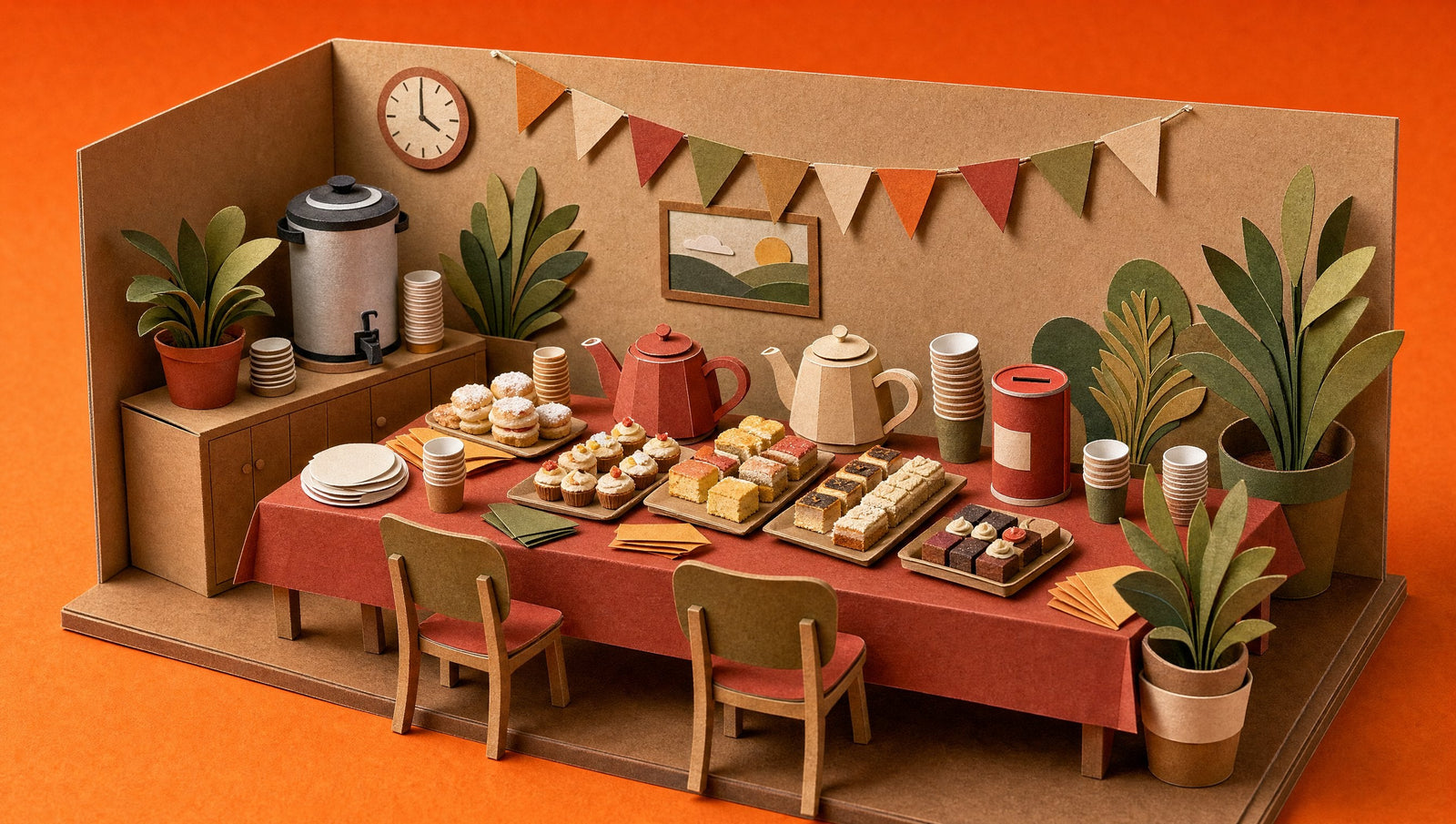
Order less than you think. A floor of thirty eats a morning tea in about twenty-five minutes. Three small pieces a head is the right ratio for anything served between meals, not five. The over-ordered tray does not go to waste in a tidy way; it stands out until four o’clock being picked at by people who were not hungry, and nobody has ever worked better for a fourth slice at half past three.
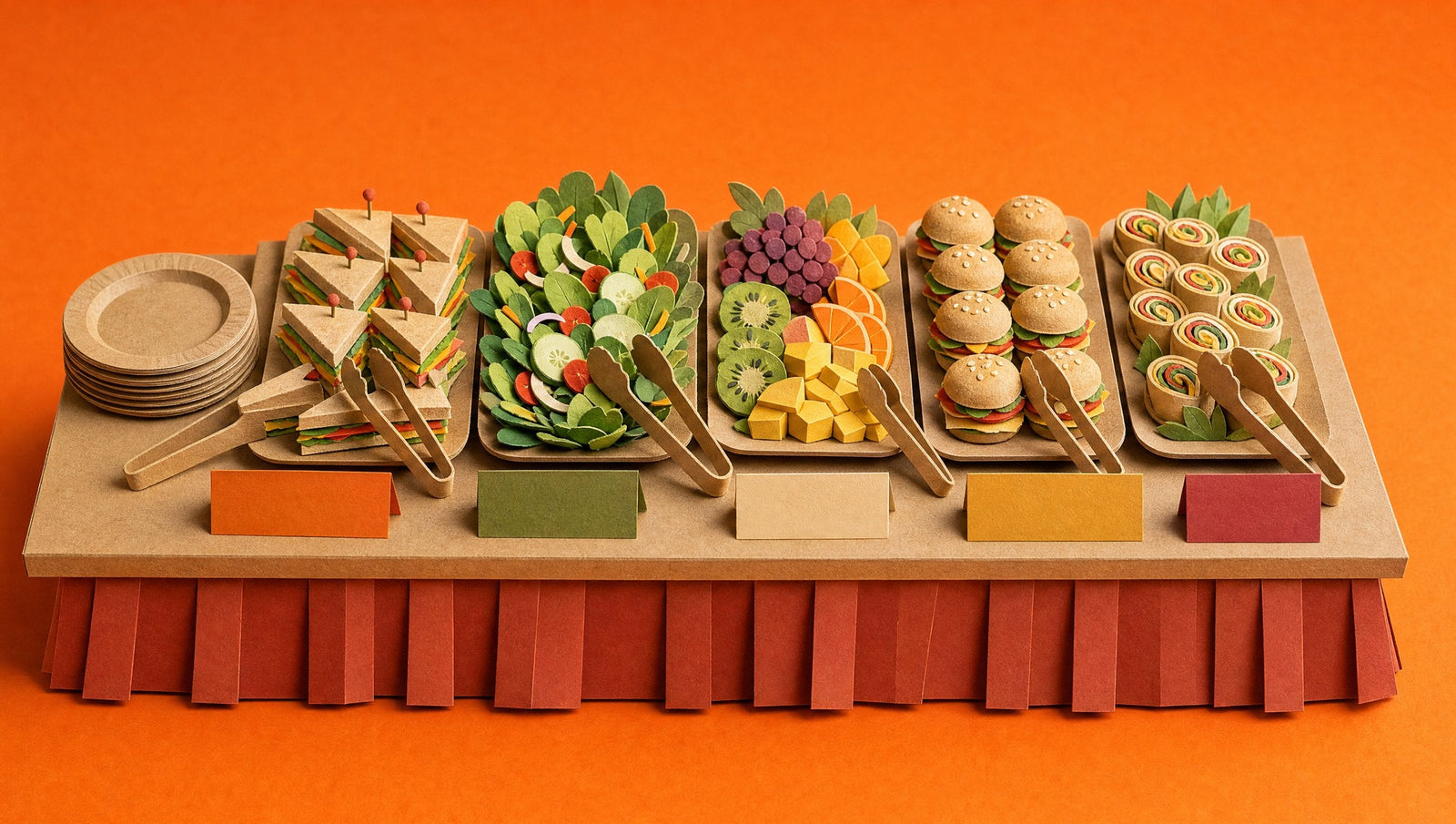
Sweet on its own will cost you the afternoon. A tray of slices and biscuits at half past ten buys a pleasant twenty minutes and a very quiet hour afterwards. Put something savoury and something with protein beside it — sandwich halves, a savoury pastry, cheese, boiled eggs, cut vegetables — and the room holds up until lunch. This is the most common ordering mistake we see, and it gets made because sweet photographs better on a table.

Know how long things stay good. Cut apple, pear and banana are brown within about twenty minutes of the knife, so if the fruit has to sit through a meeting, leave all three off the platter and lean on melon, grapes, berries and citrus, which hold their colour for hours. Laminated pastry is at its best in the first hour and leathery by the third. Anything fried is excellent for about fifteen minutes and ordinary after thirty, which is why hot finger food is only worth ordering when the food and the people arrive at the same time. Watermelon weeps as it sits, so give it one row along an edge of the tray rather than scattering it through the middle, and the rest of the platter stays dry.
Order about a third more of the vegetarian option than you have vegetarians. Everybody eats it. Order strictly to headcount and the people it was ordered for are the ones who miss out, which is the exact opposite of the intention.
Put water on the table. Not as a wellness gesture. A jug of water next to the food is the cheapest available fix for the mid-afternoon headache that half an office treats as a caffeine problem, and it costs nothing to put out.
None of this is about eating better in the abstract. It is about the fact that a room fed sensibly at half past ten is still useful at three, and a room fed badly is not, and the difference costs about the same money either way.
Optimize Your Workspace
Start with the desk itself. A clear surface is not tidiness for its own sake; it is the removal of a dozen small decisions you would otherwise make every time you look up. Then personalise it enough that it feels like somewhere you work rather than somewhere you have been placed — a photograph, something you like looking at, a decent lamp.
Plants help, and the research on this is unusually consistent: people working near greenery report lower stress and measurably better focus. Colour matters too, in a smaller way. Blue reads as calm and suits sustained concentration; red pulls attention and suits work that needs an eye for detail. Neither will rescue a badly organised day, but both are free once you are choosing anyway.

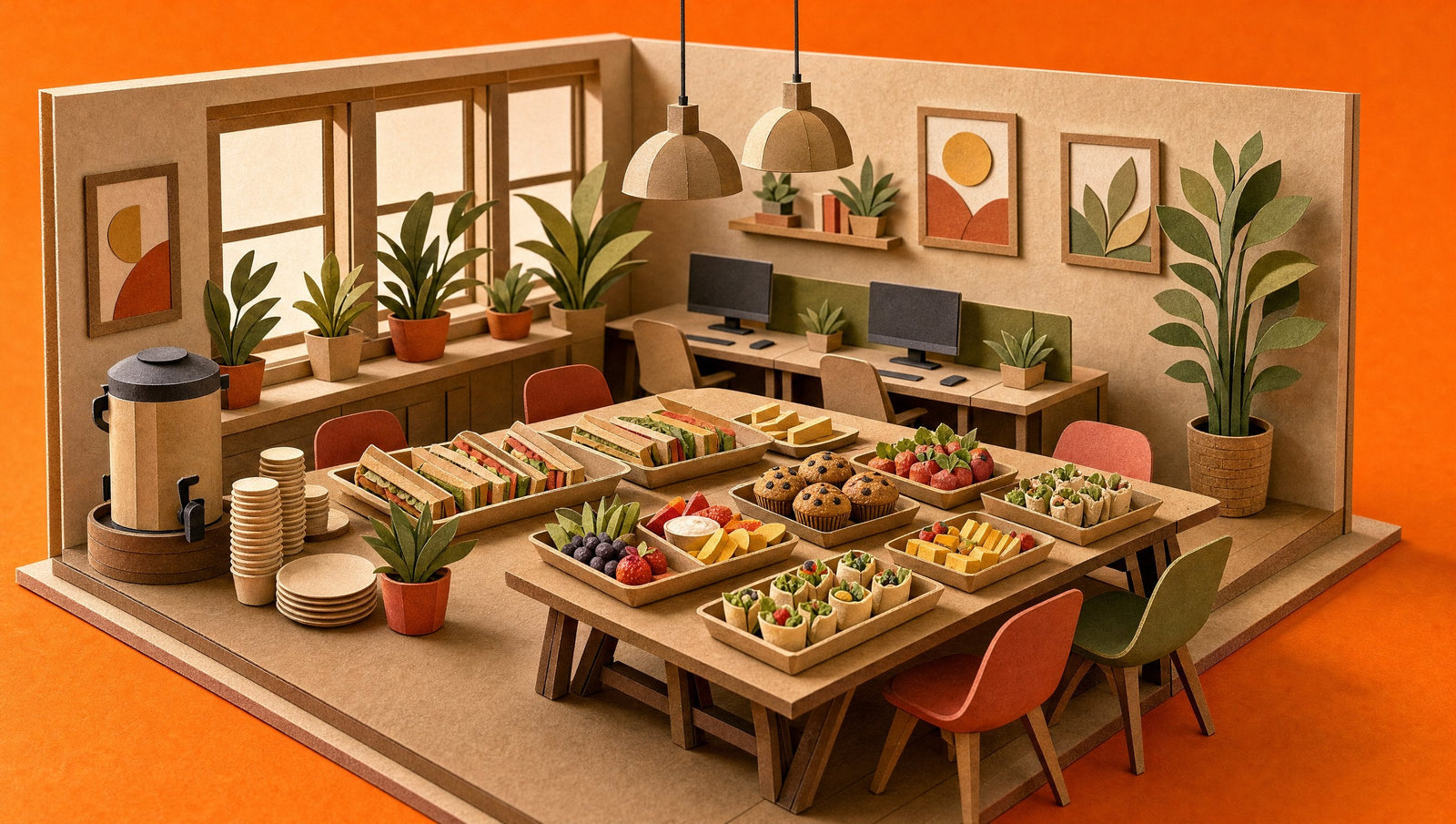
The part of workspace design that nobody plans for is the shared surface, and we notice it because we are the ones carrying things into the room. A catering delivery needs roughly a metre and a half of clear bench, and a power point within reach of it if there is an urn. Offices that have neither end up with trays balanced on the end of somebody’s desk, which means the food sits in a walkway, the person whose desk it is does not get a break, and the whole floor eats standing between two monitors.
One table that belongs to nobody is worth more to a floor than a better chair. It is where the morning tea goes, where two people sit to work something out without booking a room, and where anyone who wants twenty minutes away from a screen can actually go. Most offices already have the space and have filled it with a printer.
Practice Healthy Habits
Sleep, movement and food. There is nothing secret here, which is exactly why it gets skipped — advice this obvious is easy to agree with and easy to not do.

Exercise is the one with the most immediate return. A morning run, a walk at lunch, twenty minutes of anything that raises your heart rate: the effect on mood and focus turns up the same day, not in six months. It is also the easiest thing to schedule into a low hour, since it does not need you to be sharp.
Plan the eating in advance the way a kitchen does. A bakery writes tomorrow’s list before it closes today, because a decision made under pressure at six in the morning is a worse decision and a slower one. The domestic version is fifteen minutes on a Sunday and a shopping list; the office version is a standing order and a fridge that has something in it that is not from a vending machine.
And eat with other people at least once a week. The offices we deliver to on a standing weekly order are noticeably different places from the ones we visit twice a year for something formal. Half an hour on a Thursday where thirty people stand in the same room and talk about nothing much is not a perk. It is how a floor finds out what the rest of the floor is doing, and it is far cheaper than the meeting that gets called later because nobody knew.
Set Boundaries
A boundary is a limit you have said out loud. That is the whole of it. Limits that live only in your head are not boundaries; they are resentments waiting for a trigger, and the person crossing them usually has no idea they exist.
Our own is a 4pm cut-off. Order before four and it goes out the next day, Saturdays included at the same rate, with no last-minute surcharge. That one published number is the reason the promise is keepable at all — the kitchen knows at four o’clock exactly what tomorrow looks like, orders the bread against it, and rosters against it. Move the cut-off to suit whoever asks last and the promise stops being true for everybody else who ordered on time.
The same holds at a desk. People argue with a vague limit and accept a stated one. “I am usually flat out in the mornings” invites a negotiation. “I do not take meetings before eleven” does not, and nobody is offended by it after the first week.
Effective boundaries in the workplace:
- Foster positive communication
- Reduce misunderstandings
- Create a respectful environment where employees can share ideas and feedback without fear
- Enhance productivity
- Build a healthier, more collaborative work culture
Boundaries also make expectations negotiable in advance rather than contestable afterwards. If everyone knows what the working hours are, what a reasonable turnaround looks like and when a request has missed the day, then the awkward conversation happens once, in the calm, instead of every week in the rush.
Reflect and Adjust
Set aside half an hour at the end of the week to look back at it. This is the weekly review from the Getting Things Done method, and it is the step almost everybody drops first, because it is the only part of a productivity system that produces nothing you can point at.

Track a couple of plain numbers while you are there: hours actually worked, tasks finished, and how the energy ran. Three or four weeks of that will tell you more about your own patterns than any amount of reading, largely because it is about you rather than about somebody else’s morning routine.
The most honest feedback we ever get is not a review or a reply to an email. It is the tray that comes back. Nobody rings to say the sandwiches were fine but the sausage rolls went untouched and the fruit disappeared in four minutes. The returned tray says all of it, without anyone having to be polite, and it is the reason our platters look different now from how they looked ten years ago.
Do the same with your own week. The useful information is not the list of what you finished, which is mostly a list of what was easy. It is the two or three items that have been carried over three weeks running. Something is wrong with each of those — it is bigger than one line suggests, it belongs to somebody else, or it does not actually need doing. Carrying it for a fourth week will not tell you which.
And accept that this is personal. What works for one person genuinely does not work for another, and a method that suits a colleague may be useless to you. Keep the parts that survive contact with your own week and drop the rest without feeling you have failed at them.
Summary
Getting more done at work comes down to a handful of unglamorous decisions: know which hours are yours, rank the list, cut the interruptions, group the repetitive work, hand over what does not need you, take breaks that are actually breaks, and eat in a way that leaves you standing at three o’clock.
The part we would add, from the outside looking in, is that the food and the timetable are the same problem. A floor that eats sensibly at a table it can walk to, at a time somebody chose on purpose, works better in the afternoon than one that grazes at its desks all morning. That is not a wellbeing argument. It is the difference we watch happen from the doorway several times a week.
Pick two things from this list rather than ten. Run them for a month, review them honestly, and keep whichever one is still going.
Frequently Asked Questions
How can I identify my most productive hours?
Track it for two weeks. At the end of each hour, note what you were doing and whether the work felt sharp, adequate or a slog. Patterns show up quickly, and they are usually not the ones you assumed. Then block your two best hours in the calendar and move the admin into the flat ones.
What is the Eisenhower Matrix?
A way of sorting tasks into four boxes by urgency and importance: do the urgent and important, schedule the important but not urgent, delegate the urgent but unimportant, and delete the rest. Its real value is the fourth box, which is nearly always fuller than people expect.
How can I limit distractions at work?
Silence the notifications you did not choose, set two or three fixed times for email, use a blocker during protected hours and work somewhere the interruptions cannot reach you. In an office, also fix the timing of anything that arrives — food, deliveries, couriers — so it lands when people are ready for it rather than in the middle of the morning.
Why is delegation important for productivity?
Because it moves work with a fixed price and a fixed time away from the person with the most context. It frees your hours for the things only you can decide, and it hands other people ownership, which is where engagement and capability actually come from. Anything you can buy at a known price, such as catering, is the easiest place to start.
What are some healthy habits to boost productivity?
Regular movement, enough sleep, a break away from the desk, and food that is not only sugar. If you are ordering for a team, three small pieces a head is enough for a morning tea, put something savoury next to the sweet, add a third more of the vegetarian option than you have vegetarians, and get water onto the table.

Leave a comment
Comments will be approved before showing up.