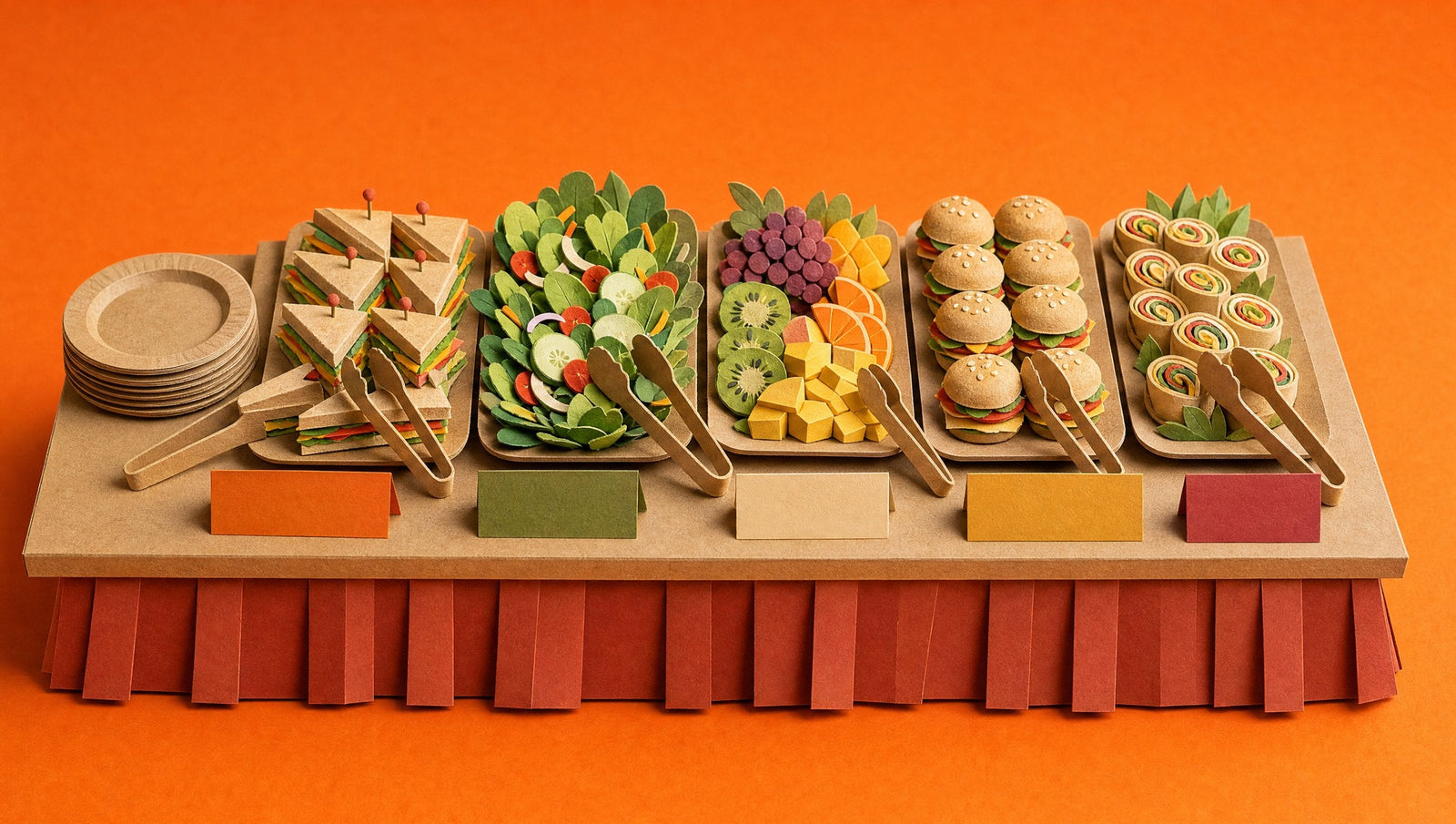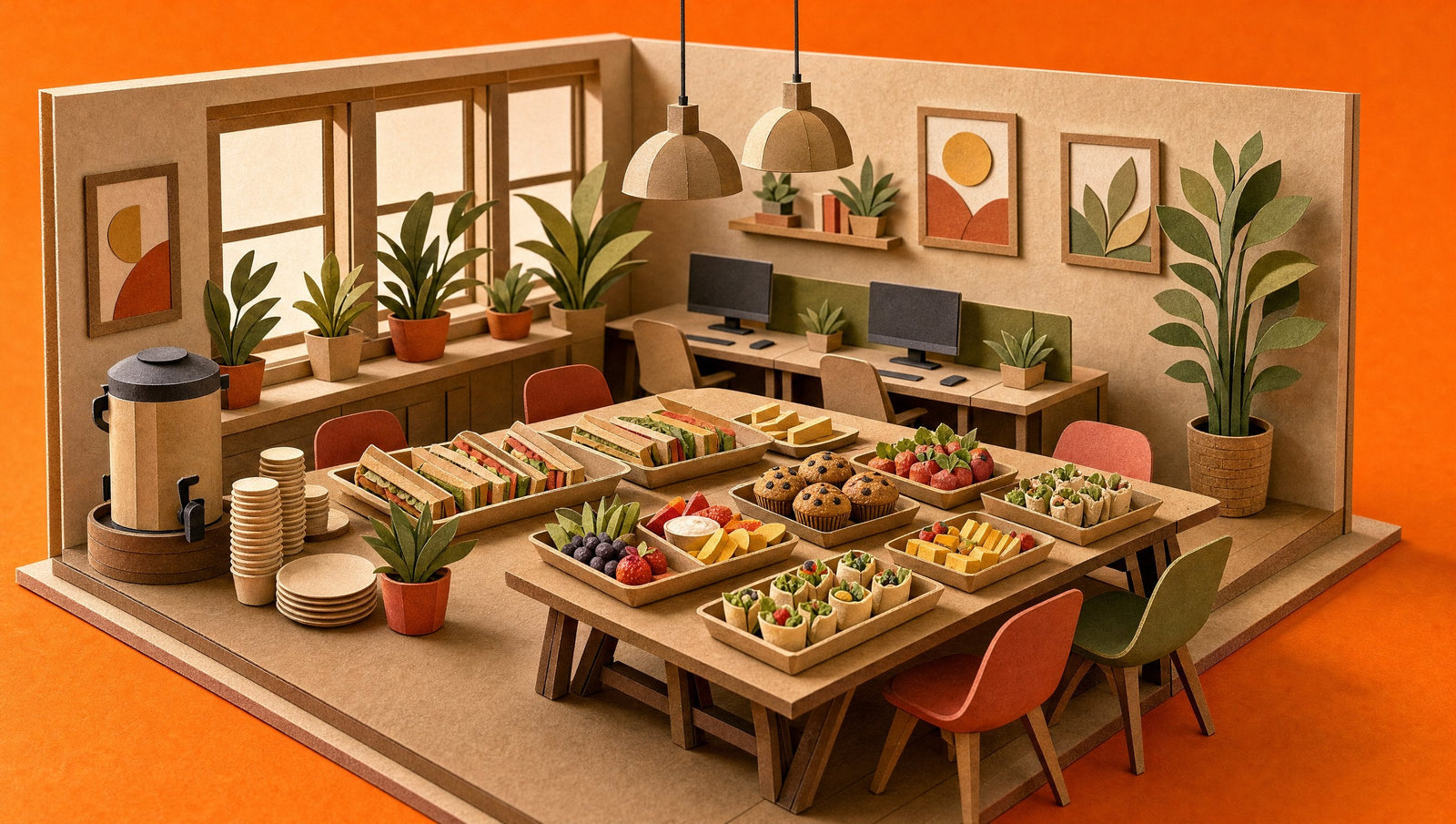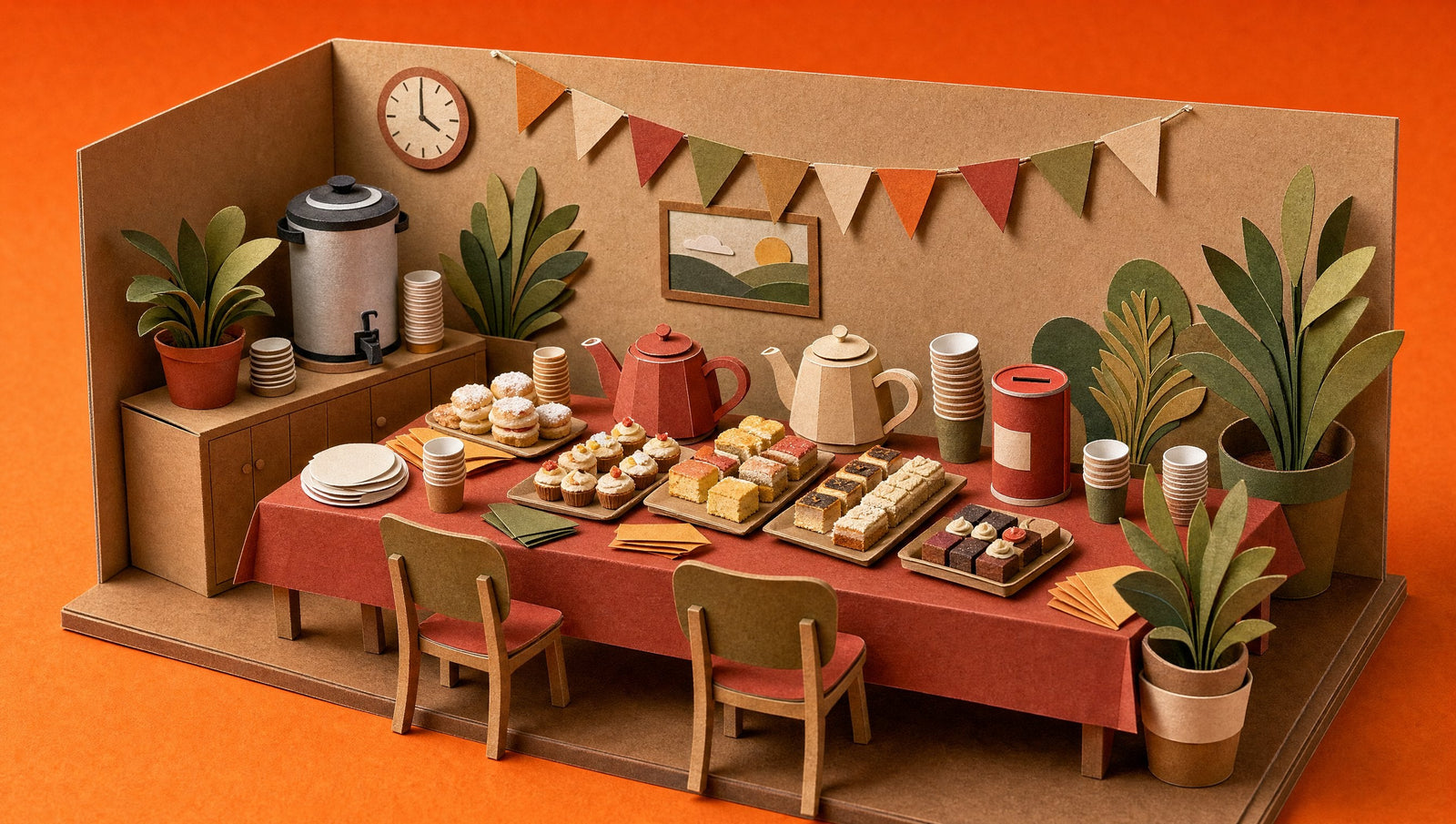
Perfect Tips On How To Order Catering For The Next Event


Catering for an event is almost always somebody's second job. The person organising it has a real role already — office manager, executive assistant, team lead, or whoever happened to say yes in a meeting — and the food sits on top of that, usually decided in the last hour before the order has to go in. That is not a lack of care. It is that catering asks for numbers nobody has yet: how many are coming, when they will actually eat, and whether they will be sitting down.
We have been catering out of a kitchen at 159 Knapp St in Fortitude Valley since 2005, and the orders that go wrong are almost never the ones with the ambitious menu. They are the ones where the food was right and the timing, the table or the head count was not. Nobody has ever rung us to say a sandwich was badly made. They ring because there were forty people and food for thirty, or because the platters landed at ten in the morning for a one o'clock lunch and sat in a warm room for three hours.
So the five questions below are not a checklist for the sake of one. They are the things a kitchen needs answered before it can build a menu that survives the trip, and they are the things that most often decide whether a room eats well. Work through them in order and the rest of it — platters or boxes, hot or cold, one drop or two — largely answers itself.
If you already know what the room needs, you can order catering for the next event straight off the menu and skip to the notes at the end about cut-off times and delivery. If you are starting from a blank page and a head count that keeps moving, start at the top.

1. What event are you catering for?
What kind of event sounds like a question about tone. In a kitchen it is shorthand for three practical variables, and those variables decide the menu: whether people are sitting or standing, whether they have a free hand, and whether they are facing somebody who is talking.
A standing crowd eats faster and eats more. People graze while they move, and they take a second piece because it is in front of them. They also only have one hand free, because the other one is holding a drink or a plate. Anything that needs two hands or a knife fails at a stand-up event, and it fails visibly — you get a room of people holding a wrap they cannot bite without wearing it.

A seated lunch is the opposite problem. People eat while they talk, so the food sits out much longer, and anything with a short window is a poor choice no matter how good it is on the day. A seated group of twenty will take about forty minutes to work through what a standing group of twenty clears in fifteen.
If there is a presenter, the room has a third constraint that nobody thinks of until it happens: noise. Corn chips, crackling pastry and anything that has to be cut on a plate compete with whoever is speaking, and the room censors itself — people stop eating rather than make noise, and half the order comes back. For a session with a speaker, the food wants to be quiet and already portioned.
The type of event also tells us how the room fills, which is really a question about timing. A team lunch trickles in over twenty minutes. A funeral or a memorial fills completely within about ten minutes of the service ending and is over inside ninety, so the first hour carries nearly the whole order. A training day is the reverse again: the same twenty people come back four times, and food sent all at once at ten in the morning is at its worst by the time the afternoon break arrives.
How much to order per head
Once the shape of the room is clear the quantities are simple, and these are the numbers we would give anyone over the phone anyway.
- One and a half rounds a head for a working lunch. One a head for a morning tea where there is something else on the table.
- Five to six pieces a head of finger small foods for an hour of grazing alongside drinks, and eight to ten a head if the finger food is standing in for lunch rather than sitting beside it.
- About a third more of the vegetarian than you have vegetarians. Everybody eats it, not only the people who asked for it.
- Round up on anything sweet. A leftover slice is a nuisance. Thirty people and twenty-eight portions is a problem you will hear about.

2. Understand your space
The useful question about a venue is not how big the room is. It is how much clear table there is, and whether people can get at both sides of it.
A platter needs roughly sixty centimetres of clear table run, and a spread for thirty wants about two metres of it once you allow for plates, napkins and somewhere to put a cup down. Most meeting rooms have a table that size and almost none of it free, because it is covered in laptops, notepads and a projector. The table you measured on the floor plan is not the table you will have at midday.
Access matters more than length. A table pushed against a wall can only be served from one side, which turns thirty people into a single queue. The same table pulled out sixty centimetres can be served from both sides and the queue halves. That one move is worth more than most decisions about the menu, because a room that takes twelve minutes to get food takes twelve minutes out of the meeting.
When there is genuinely no table — a boardroom mid-session, a site office, a room of people who cannot get up — the answer is not a smaller platter. It is individually packed boxes, handed out. Packed lunches solve a space problem that platters cannot, and they solve the quieter half of it too, because nobody has to work out whether the last sandwich on the tray is theirs to take.
What the driver needs to know
The rest of the space questions are the ones drivers care about, and they belong in the order notes rather than in your head.
- Name the door the food actually arrives at, not the one on the letterhead. Loading dock, after-hours entry, which lift, which level, and whether the roller door is still down before seven.
- Put a mobile number on the order that somebody will answer at that hour. The worst number on the form belongs to the person chairing the meeting, because at the moment the driver needs them they are inside the room the food is for.
- Say if there is a security desk or a sign-in. A driver who has to be signed in and escorted loses ten minutes, and a delivery that was on time at the front door is late at the table.
Two last things about the room itself. Keep platters away from a window that gets the sun and off anything that runs warm — the top of a photocopier is the most reliably warm surface in an Australian office and it is also, for reasons nobody can explain, where food ends up. And leave somewhere for the rubbish. Kraft trays and paper boxes stack flat and go straight in the recycling, which matters at four in the afternoon when the room has to be a meeting room again.

3. Breakfast or lunch
The time of day changes the shelf life of the food far more than it changes the menu, and shelf life is what decides whether an order works.
Pastries are at their best two to three hours out of the oven. Ours are baked early, so a half past seven drop is close to the top of that window. The thing that undoes it is the lid. A warm pastry in a closed box makes its own steam and the base goes soft within about twenty minutes, so open the boxes when they land even if the meeting is still half an hour away.
Sandwiches are built on the morning of the delivery rather than the night before, and they hold well for about four hours under cover. What goes first is the cut edge: a cut sandwich dries from the face inwards, so a platter that has been sitting open since ten is noticeably tireder at one o'clock than the same platter opened at half past twelve. Leave the cover on until people are actually ready to eat.

Anything fried is excellent for about fifteen minutes and ordinary after thirty. Pies and sausage rolls travel better than most hot food because the pastry protects what is inside, but they still arrive at their peak and go one direction from there. Order hot items only when the food and the people arrive at the same time.
The eating time, not the delivery time
Which brings up the single most useful line to put on any catering order: the time the food will be eaten, not the time you would like it delivered. Those are two different problems and only one of them is ours to solve. An eleven o'clock delivery for a one o'clock lunch is two hours of a warm room working on platters that were cut at six that morning, and the fix is almost always to move the drop rather than to change the menu.
Breakfast and lunch also behave differently as social events, which is worth knowing before you spend the budget. A breakfast meeting is short and people eat standing, so it wants one-handed food and more coffee than seems reasonable. Lunch is where a room slows down and people talk to each other, and a lunch that a team actually sits at is worth more to them than the same money spent on a fancier morning tea.
If you are looking for catering around Brisbane CBD and the suburbs close by, Mr. T’s bakery covers breakfast, morning tea, lunch and afternoon platters out of the one kitchen, which mostly matters because it means one delivery and one person to ring rather than three. Cold options carry a long meeting better than hot ones, and a mixed order that starts hot and finishes cold is usually the wrong way round — send the hot thing at the hour the room is fullest, not first thing while half of them are still parking.
Two mechanics worth knowing before you set a time. Our cut-off is 4pm for next-day delivery, and that hour is set by the bake rather than by anything else: the prep list for tomorrow goes up in the afternoon and the doughs are set that night. And pick-up runs from 7am at 159 Knapp St, which is often the simpler answer for a very early start, because somebody collects on the way in and the food is on the table before the room fills up.

4. Catering for special diets
Every room has more dietary requirements in it than the invite list admits. People do not volunteer them. They arrive, look at the table, quietly eat nothing, and the organiser finds out three days later or never finds out at all.
The old rule of thumb is that about fifteen per cent of an order should be vegetarian or gluten-free, and as a floor that still holds. In practice we order to a different number: about a third more vegetarian than you have declared vegetarians, because vegetarian food gets eaten by everybody. A vegetarian platter sized exactly for the four vegetarians in the room will be half gone before they reach it.
Handling gluten-free and vegan orders
Gluten-free is not a menu problem, it is a handling problem. Gluten-free food that goes onto a shared platter has stopped being gluten-free the moment somebody's hand crosses it, so it travels packed separately and it should stay that way on the table. Put that box at the start of the run rather than the end, hand it to the person it is for, and the whole thing is solved in about four seconds. Left to the end of a buffet, it gets eaten by people who did not need it.
The categories are also not interchangeable, and the mix-ups are remarkably consistent. Egg mayonnaise is vegetarian and it is not vegan. Vegan and dairy-free overlap heavily but they are not the same list. When you collect dietary requirements from a room, collect them one person at a time rather than as a single line reading some dietaries, because some dietaries is what produces a tray of cheese sandwiches for a vegan.
Our dietary information sits in the product names themselves rather than buried in a description, so an order can be checked at a glance before it goes in. What you want is to be able to open the confirmation email and count the vegetarian and gluten-free items without clicking into anything.
The last piece is telling the room. A separate box with nothing said about it will be treated as ordinary food inside two minutes. Keep the separate boxes separate on the table, put them at the front of the run, and tell the person they were ordered for that they exist. That one sentence at the start of a lunch does more than any amount of menu planning.
See more: VEGETARIAN AND VEGAN GUIDES TO SPECIAL DIETS

5. Stay hydrated
Drinks are the most commonly under-ordered part of a catering order and the one a room feels the absence of fastest. Food that runs out is a story afterwards. Water that runs out in a Brisbane meeting room in February is a problem within the next fifteen minutes.
The numbers we work to are one and a half drinks a head for the first hour and one a head for every hour after that. In summer roughly half of everything drunk in a room is plain water, which is worth over-ordering because it is the cheapest thing on the table and the only one anybody actually needs.
Coffee, cold drinks and cups
Coffee behaves in a way that catches people out the first time they organise a morning meeting. An urn does not get drunk steadily. It empties in the first fifteen minutes and then sits there. If a session runs three hours, the coffee wants to arrive in two lots or it will be cold and finished long before the mid-morning break it was ordered for. Tea is the opposite and gets drunk slowly all day.
Cold drinks need to be cold when they arrive rather than cold at some point later in the morning. A room-temperature bottle takes roughly two hours in an office fridge to be worth drinking, and office fridges are already full of other people's lunches. If the drinks are coming from somewhere other than the caterer, put them in the fridge the day before, not on the morning.
Two smaller things that cost nothing to get right. Order about two cups a head rather than one, because people put a cup down, lose track of it and take a fresh one; a room of thirty will get through fifty-odd cups over a long morning. And juice goes further than it looks — one carton covers four to six people when there is water on the table as well.
What alcohol does to a lunch
On alcohol, the practical objection at a work event is not a moral one. It is that people stop eating. A room that starts drinking at midday leaves most of a lunch order on the table, the food you paid for goes in the bin, and the afternoon quietly disappears. For an office Christmas party or a year-end function it clearly has its place. For anything with a meeting after it, a couple of bottles at most, and the rest of that money spent on soft drinks, juice and water will go a good deal further.
Ordering, cut-off times and delivery

Those five questions — what the event is, what the space allows, what time of day it happens, who cannot eat what, and what people will drink — carry almost all of it. Menus are the easy part, and any caterer worth ringing will build one for you once those answers exist.
The mechanics at our end are deliberately unremarkable. The cut-off is 4pm for next-day delivery and there is no last-minute surcharge, so an order placed at 3.55pm costs exactly what the same order placed on Monday costs; the only thing the clock changes is whether it makes tomorrow's list. Delivery starts at $19 on orders over $150, we run to more than 50 Brisbane suburbs, and Saturday is the same rate as a weekday. Pick-up is from 7am. The one thing that genuinely needs notice is anything decorated: decorated cakes and cupcakes need two to three business days, because they are made and finished by hand and there is no honest way to shorten that.
Plan a few months out if the date is fixed, or a few days out if that is all you have. Both work. What does not work is settling the head count after the order has gone in, so if there is one thing to nail down before you type anything, make it the number of people and the hour they will be standing in front of the food.

Leave a comment
Comments will be approved before showing up.