Easy Vegetarian And Vegan Guides To Special Diets


Somebody in your office does not eat meat. Possibly several people, possibly one who has never mentioned it because it is easier to eat around the edges of a platter than to make a fuss.
We cater a few thousand of these rooms a year, and the pattern is always the same: the vegetarian option is ordered last, arrives smallest, and runs out first. This is a guide to getting it right — what the words actually mean, what a plant-based eater needs nutritionally, and how to order for a mixed room without anyone going hungry.

Vegetarianism in Numbers
Roughly one in ten Australian adults now eats all or mostly vegetarian, and the number is considerably higher under thirty. In practice that means a room of twenty people will have two or three, and a room of fifty will have five or six.
The more useful number for a caterer is a different one: the proportion of people who will happily eat the vegetarian option even though they are not vegetarian. That is most of them. A good plant platter gets eaten by everybody, which is exactly why ordering one small tray of it always fails.
The shift is generational rather than ideological. Very few of the people we cater for describe themselves as vegetarian in any committed way. They eat less meat than their parents did, they do not think about it much, and they will take the halloumi skewer over the ham sandwich without it meaning anything at all.
For anyone ordering food, that is the practical takeaway. You are not catering for a minority with a special requirement. You are catering for a room where the plant food is simply popular, and running out of it reads as poor planning rather than as a dietary oversight.

Vegan vs. Vegetarian: What’s the Difference
Vegetarian means no meat, no poultry, no fish. Dairy and eggs are usually fine, which is why cheese, quiche, frittata and most cakes are all still on the table.
Vegan means no animal products at all — so no dairy, no eggs, and no honey. That is a much bigger change for a bakery than people expect, because butter, milk and egg are the backbone of almost everything in a display case.
Honey is the one that catches people out. A guest who has been eating happily all afternoon will stop at the fruit platter because of the drizzle on it, and nobody thinks to mention it until it is too late to fix.

The practical consequence is worth knowing before you order. A vegetarian tray can be built from the standard range by leaving things out. A vegan tray has to be baked differently from the start, which is why it needs to be ordered rather than assumed.
Two more terms turn up on the same forms. Plant-based usually means vegan but is sometimes used loosely, so ask. Pescatarian means fish is fine — and a pescatarian handed a vegetarian box is being catered for correctly, just conservatively.

Complete Nutrition for Vegetarians
The old worry was protein, and it was largely misplaced. Lentils, chickpeas, beans, tofu, nuts, seeds and grains cover it comfortably for anyone eating enough food overall.
The nutrients that genuinely need attention are less discussed. Vitamin B12 is the real one — it is not reliably available from plants at all, so vegans need fortified foods or a supplement. Iron from plants absorbs less readily than iron from meat, though eating it alongside something with vitamin C closes most of that gap. Calcium, iodine, zinc and omega-3 all need a little thought rather than a lot of worry.
That vitamin C point is the one worth carrying into a lunch order rather than a supplement cupboard. Lentils with roasted capsicum, chickpeas with lemon, leaves with tomato — the combinations that taste obviously right are the ones that happen to work, which is usually how food traditions end up where they are.
None of this is advice for anyone with a medical condition, and we are a bakery rather than a dietitian. But it is the reason a good vegetarian platter looks the way it does: several things rather than one, and at least one of them substantial.

None of that is a caterer's job, but one part of it is: variety. A tray of nothing but salad leaves is not a meal, and it is the single most common way a vegetarian guest is short-changed. Grains, legumes, something roasted and something with fat in it turn a side dish into lunch.

To A Healthy Living and Clean Lifestyle
If you are the one placing the order, three things make the difference between catering for people and catering around them.
Order by headcount, not as an afterthought. Two vegetarians in a room of twenty does not mean two portions — everyone else will eat it too. Order enough that it is one of the platters rather than the exception.
Ask about vegan specifically. People will tell you they are vegetarian and not mention that they are actually vegan, because they have learned it makes them difficult. Asking directly removes that.
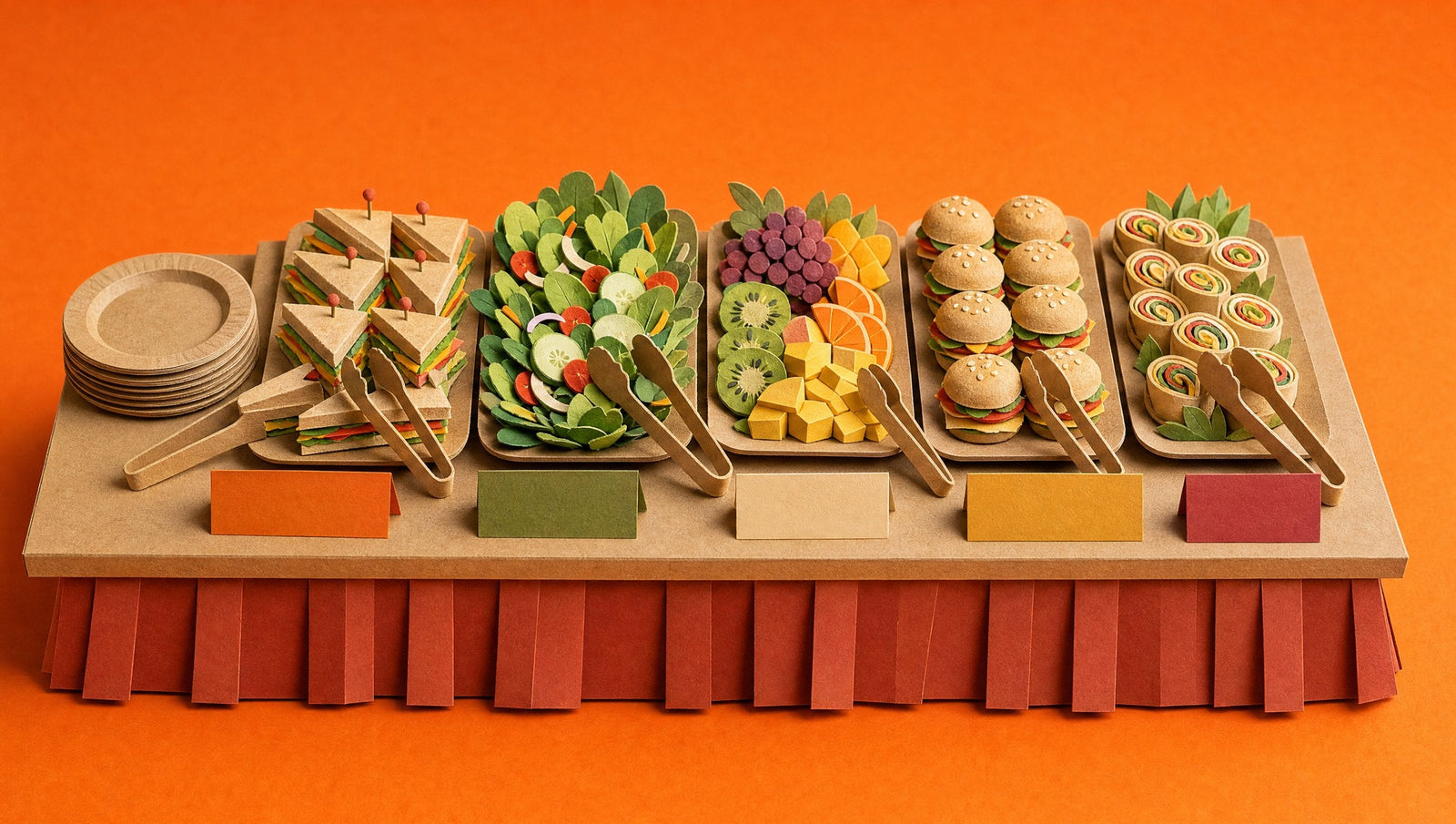
Label it. A vegan guest standing over an unlabelled tray will assume the answer is no and go without. We put the dietary icons in the product names for this reason — it is the cheapest way to make sure the food actually gets eaten.
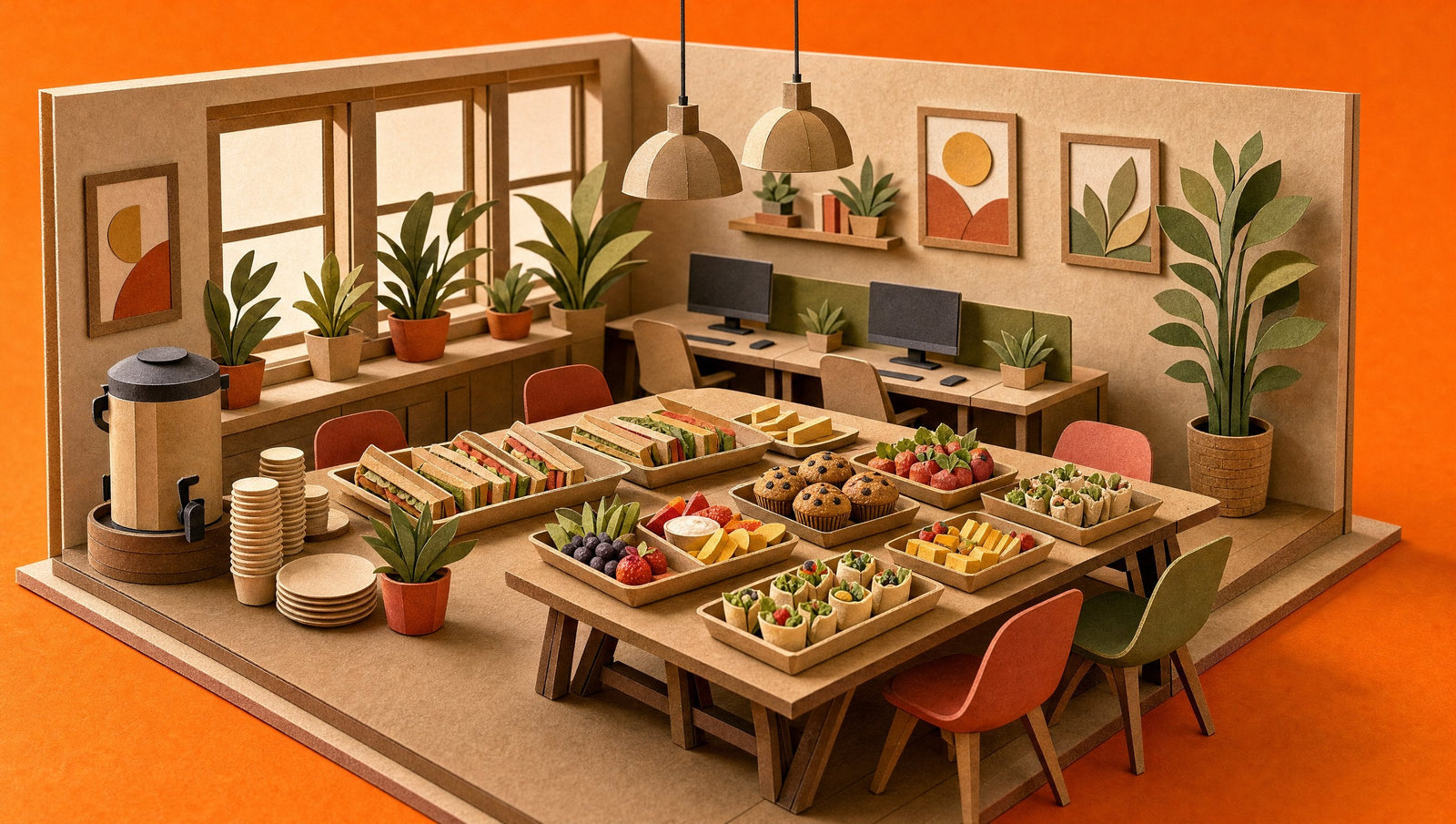
One more, if the room matters to you: put the plant food in the middle of the table rather than at the end. A platter at the far end reads as the alternative, and the person it was ordered for has to walk past everyone to reach it. In the middle it is simply lunch, and that small change does more for how included somebody feels than any amount of asking.
Across our range the gluten free, vegan and dairy free options sit alongside everything else rather than in a separate corner of the menu, and the Breakfast range is where most mixed rooms start. Tell us what the room needs when you order and it reaches the kitchen, not a note on a printout.

Leave a comment
Comments will be approved before showing up.