What Food To Order On Australia Day?


Australia Day lands on 26 January, which in Brisbane means somewhere between thirty and thirty-five degrees, humidity to match, and a house full of people who arrived earlier than they said they would. The food question sorts itself out quickly once you accept that. Whatever you serve has to survive a hot afternoon on an outdoor table, and most of the classics were never designed for it.
We have catered the day out of Fortitude Valley since 2005 — backyard parties, work functions that run into the long weekend, community events in parks where nobody has a kitchen. The list below is the same list everybody writes, because these genuinely are the foods people want on the day. What is worth adding is how each one behaves after it has been made, carried across town and then left alone on a table in the sun for two hours, because that is the part that decides whether it gets eaten or thrown out.

Order by the timeline rather than the menu. Anything hot has about forty minutes of being genuinely hot. Anything carrying cream or mayonnaise has a couple of hours before it becomes a question of food safety rather than taste. Anything crisp stops being crisp almost immediately. Build the spread so the short-fuse items come out while people are standing right there, and let everything else sit.
Meat Pies

The mini beef pie is the first thing to disappear off an Australia Day table and the one most often served badly. A hot pie carries its own downfall: the base sits in its own steam, so a stack of pies in a closed box or under foil goes soft underneath within about twenty minutes. Leave the lid off, or leave the box open a crack. Pastry that has gone soft on the bottom cannot be brought back.
Alongside other food, count two mini pies a head. If pies are doing the heavy lifting — a work function, an office corporate catering order over lunch — count three or four and expect the last tray to go anyway.
Reheat at 180 degrees for eight to ten minutes, uncovered, and never in a microwave. A microwave heats the filling quickly and turns the pastry to leather, which is the single most common thing that goes wrong with a pie at home. If the party starts at midday, serve the pies early. Nobody wants a hot pie at three in the afternoon in January, and the ones that go cold on the table stay there.
Sausage Rolls

A sausage roll is more forgiving than a pie, because the pastry wraps the whole way round and there is no single soggy face to protect. That makes it the better choice when the food has to travel or sit out. Our beef sausage rolls go out by the tray for exactly that reason: they are the item most likely to still be worth eating an hour after everything else has been picked over.
Puff pastry loses its lift about twenty minutes after it leaves the oven. The crunch goes, the flavour does not. Do not chase the crunch by covering them to keep them warm, because foil traps steam and then you lose both. If they need holding, hold them cold and give them eight minutes at 180 to come back.
Two a head as part of a spread, and cut the large ones in half so people can take one without committing to a meal. Sausage rolls are also the thing children reliably eat, which matters at a party where a third of the guests are under ten and the barbecue is still forty minutes away.
Snags on the Barbie

Sausage on white bread with onion and tomato sauce is the national dish of standing up in a backyard. It is also cooked wrong more often than anything else on this list, and always the same way: the heat is too high.
A snag wants twelve to fifteen minutes over moderate heat, turned regularly. High heat splits the skin, drives the fat out and leaves the middle raw, and the split sausage is the tell. Cook the onions first, low and slow, then push them to the cool side of the plate while the sausages go on. Onions take longer than anyone expects and then burn in seconds once they turn.
Two sausages a head, and more bread than you have budgeted for. Plain white sliced is correct here: it folds around a hot sausage without fighting back, which a bread roll does not. Butter the bread before the sausages come off rather than after, because by then nobody has a free hand.
Lamb

Lamb is the traditional centrepiece and the least practical thing here to cook on 26 January, because a leg in the oven for two hours turns the kitchen into the hottest room in the house on the hottest day of the year.
The way round it is a butterflied leg on the barbecue. Same meat, twenty-five to thirty minutes instead of two hours, and it all happens outside. If you are roasting, allow around 250 grams of bone-in lamb a head, rest it a full twenty minutes before carving and carve across the grain. The rest is not optional — carve it straight out of the oven and the juice ends up on the board instead of in the meat.
Leftover lamb is better cold than reheated. Reheated lamb goes grey and tightens; cold sliced lamb with bread and a salad is a genuinely good second meal, and on a long weekend it is the thing people come back for.
Fresh Prawn Platter

Prawns are the most Australian thing you can put on a table on the day and the food with the shortest safe window. They need to stay under five degrees, and on a Brisbane afternoon "on ice" only counts if the ice is actually draining. A bowl of prawns sitting in melt water is a bowl of prawns sitting in warm water inside the hour.
Serve them on ice in something that drains, or set the serving bowl inside a larger one packed with ice and change the ice halfway through. Two hours out of the fridge is the outside limit and above thirty degrees treat it as one. Put out half, keep half in the esky, refill as it goes.
Five or six prawns a head as part of a spread; a kilo feeds about three people if prawns are a feature rather than a side. If guests are peeling their own you need a bowl for shells at both ends of the table, and somewhere for those shells to go afterwards. Prawn shells in a wheelie bin in January are a mistake you make exactly once — bag them and put them in the freezer until bin night.
Salads

Salad gets ordered as an afterthought and eaten faster than the meat, because the meat comes off the grill in batches and the salad is already sitting there. Order more than feels sensible. Two bowls do not stretch across twenty people once the queue at the barbecue is ten deep.
The rule that matters is when the dressing goes on. A leaf salad dressed in the kitchen is limp by the time it reaches the table, so dress it in front of people or send the dressing separately. Undressed salads travel; dressed ones do not, and no amount of good produce survives twenty minutes sitting in vinaigrette in a warm car.
Mayonnaise-based salads — potato, pasta, coleslaw — are the ones to watch. They are the first thing on the table to turn in the sun and the last thing anybody thinks to check. Keep them in the esky and bring them out in shifts rather than setting the whole bowl out at eleven and topping it up all afternoon.
January is the one month when fresh salad produce genuinely justifies the fuss. Mango, stone fruit, tomatoes and herbs are all at their best, and a mango and prawn salad or a plate of tomatoes with good oil needs almost nothing done to it. Allow roughly 150 grams of salad a head across the whole spread, and if you are ordering salads for catering rather than making them, order one more than the number you think covers it. Salad is the item that runs out first, and nobody has ever complained about having leftovers of it.
Sandwiches

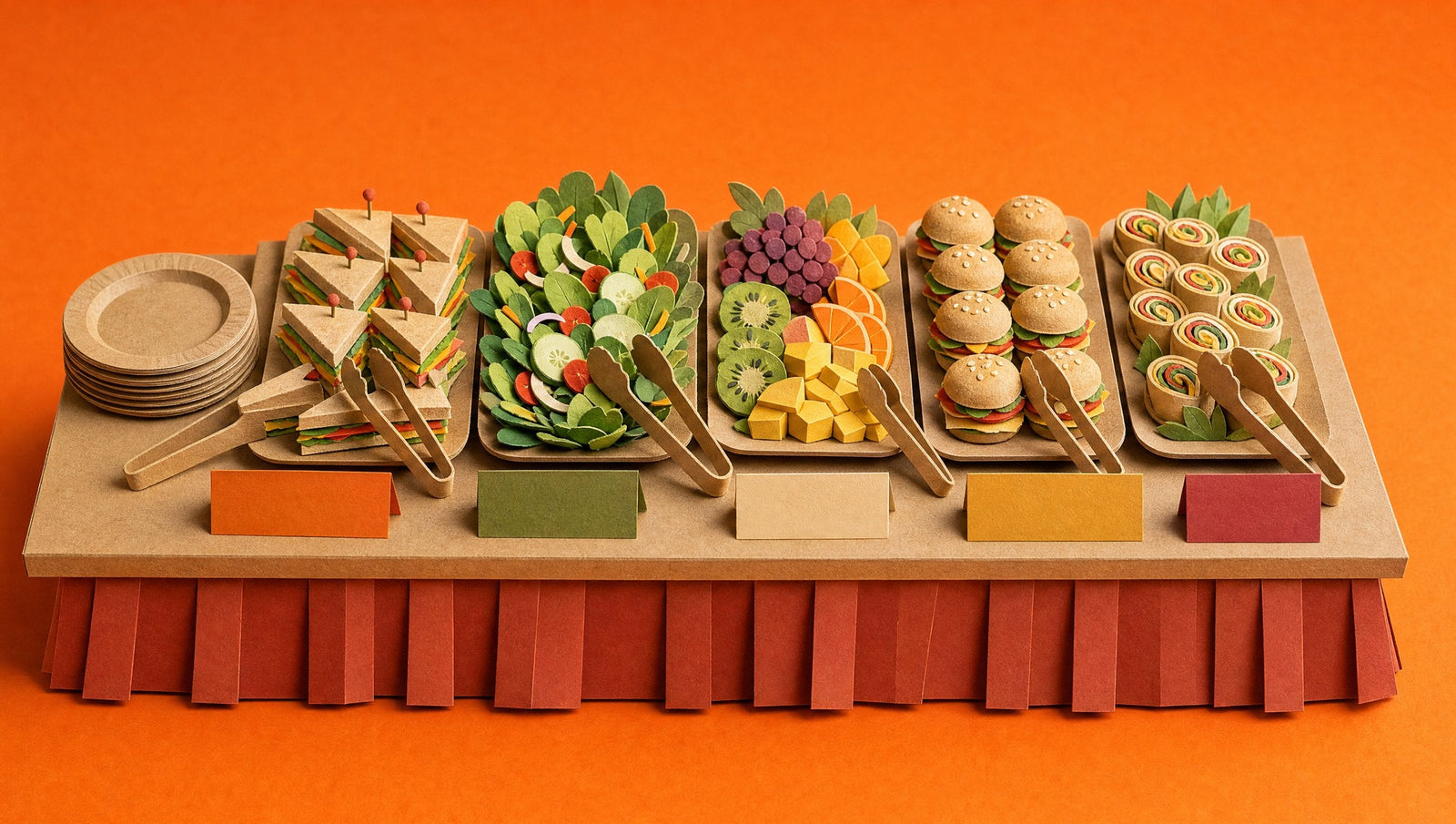
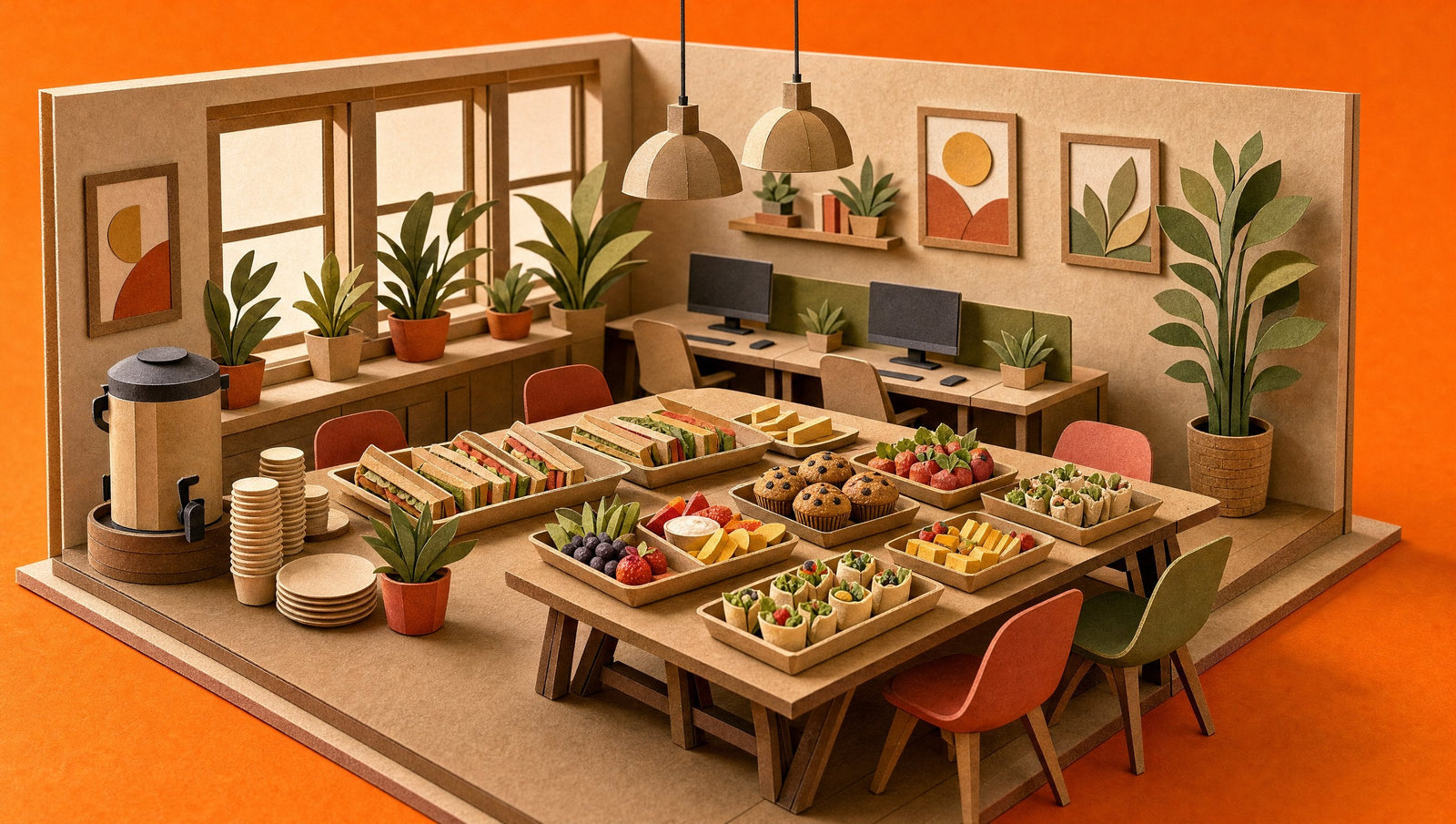
A sandwich platter is the least exciting thing you can put on an Australia Day table and the one that quietly does the most work. It feeds everybody who does not want a plate of barbecue: the children, the guests who arrived at eleven, the grandparents sitting in the shade, and the people who turn up at two once the grill has been scraped down.
A sandwich platter also solves the standing-up problem. Halves need one hand and no cutlery, so the party keeps talking instead of queueing for a plate. Allow one and a half rounds a head if sandwiches are lunch, one if they sit alongside a barbecue.
The build decides whether a platter is still good at two o'clock. Spread to the edges to seal the bread against the wet fillings, keep tomato and beetroot in the middle away from the crust, and leave the wrapping on until the moment it goes out. An uncovered platter on a hot day curls at the corners within half an hour, and bread that has curled does not come back.
Vegemite

Vegemite earns its place on this list for a reason that has nothing to do with patriotism. It is the only spread on the table that does not care how hot it is. Butter softens, cream cheese sweats, mayonnaise has a clock running on it. Vegemite sits there all day and is exactly the same at four as it was at ten.
The universal mistake is quantity. It is not jam. Butter first, then scrape the Vegemite so thin you can still see the butter through it. The taste is salt and yeast, and doubling the amount does not double the flavour, it just makes it inedible. Anyone who says they do not like it has usually been served it half a centimetre thick by somebody trying to prove a point.
On a catering table its real job is the children's sandwiches, and it works because it needs no refrigeration and holds for hours in the heat. It also deserves a mention on this particular day: it was rationed at home during the Second World War so supplies could go to Australian troops, who were issued it for its B vitamins. Not many jars in the cupboard have that on the record.
Lamington


The lamington is a sponge square rolled in chocolate and coconut, named after Lord Lamington, governor of Queensland at the turn of the last century, which makes it a Brisbane invention as much as an Australian one.
Two things about making them that nobody mentions. The sponge has to be at least a day old, and better still half an hour in the freezer, before it meets the chocolate — fresh sponge falls apart in the icing and you end up with chocolate soup. And the coconut goes everywhere, which is why they are made on trays with a lip rather than on a bench.
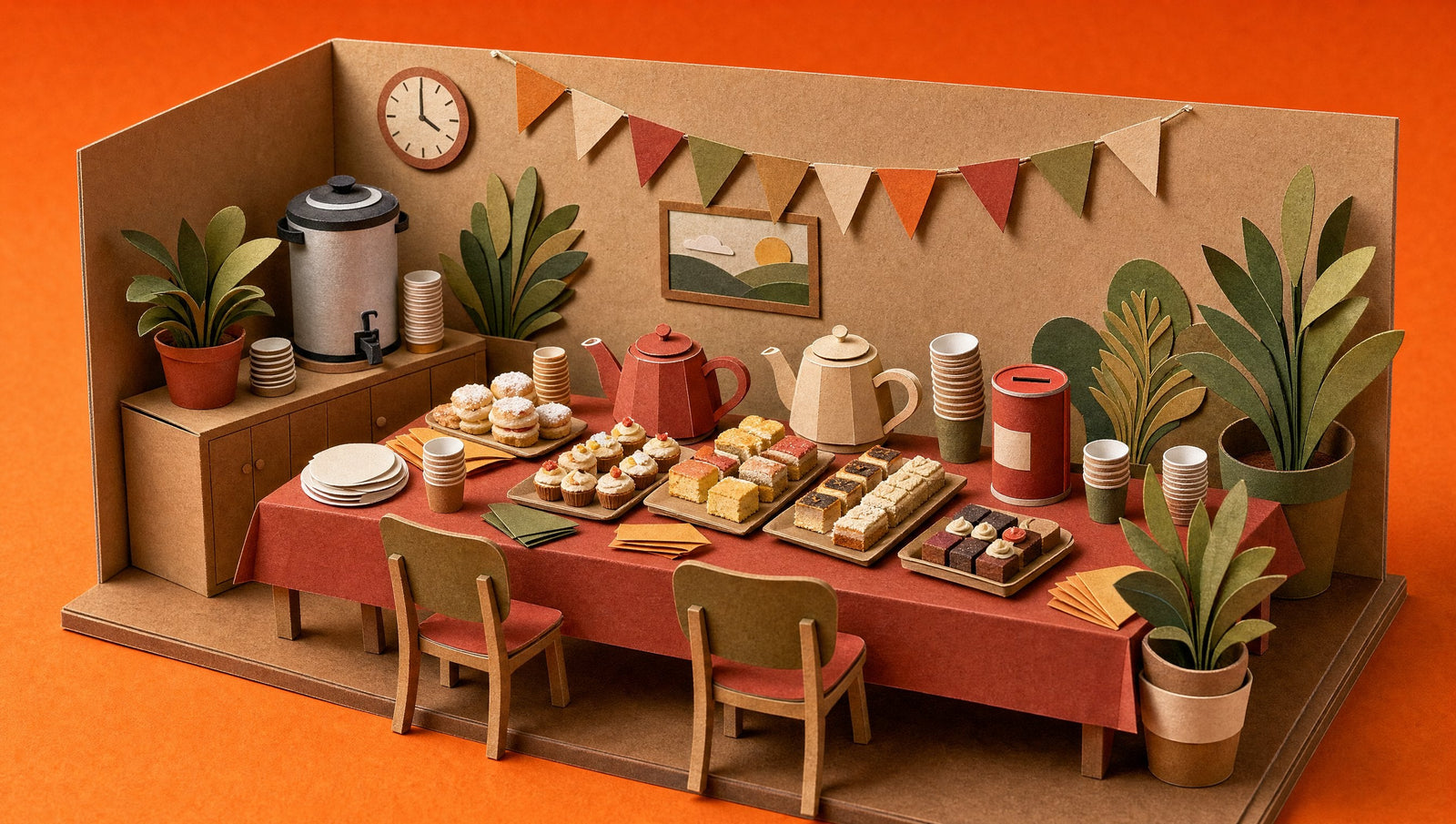
For a hot-weather party the lamington is the dessert that behaves. No cream, no refrigeration, nothing to melt. It will sit on a table all afternoon and still be good the next day. Finger lamingtons travel better than squares because there is less loose surface to shed, and they are easier to eat standing up with a drink in the other hand, which is how nearly all of them get eaten.
Pavlova

Pavlova was made in honour of the ballerina Anna Pavlova, who toured Australia in the 1920s, and the argument about which side of the Tasman built the first one has been running ever since. What is not in dispute is that it is the hardest thing on this list to serve well in January.
Meringue pulls moisture out of the air. A Brisbane afternoon is humid enough that a finished pavlova starts to go tacky and weep within about an hour of being assembled, and the crisp shell softens into something closer to marshmallow. There is no way round the weather. There is a way round the timing.
Keep the parts separate until the last possible moment. The shell lives in a sealed tin at room temperature, the cream is whipped to soft peaks and stays in the fridge, and the fruit gets cut while people are already eating. Then assemble it in front of everybody — it takes ninety seconds and it is the only dessert improved by being made in public. Do not park a finished pavlova in the fridge to hold it, because the fridge is the fastest way there is to soften a shell.
Whip the cream to soft peaks and no further. Stiff cream on a thirty-five degree day is already halfway to butter before it reaches the table and turns grainy under the fruit. Passionfruit last, over the top, at the table.
Two things decide whether an Australia Day spread works, and neither of them is the menu. The first is the order the food comes out: hot things early while people are hungry and standing near the barbecue, cold things in shifts out of the esky, dessert assembled at the table rather than laid out at noon. The second is quantity, and the honest rule is that people eat less than you expect in the heat and drink far more. Over-catering on salad and bread costs almost nothing. Over-catering on prawns is expensive and does not keep.
A rough plan for twenty adults across an afternoon: forty mini pies and sausage rolls between them, forty sausages, a kilo and a half of prawns, three large salads, two sandwich platters and a tray of lamingtons, with a pavlova assembled at the end. Scale from there. If children are coming, swap a quarter of the finger food for sandwiches and add more bread again, because a five-year-old at a barbecue eats bread and lamingtons and very little else.
Everything we make is made by hand in our Fortitude Valley kitchen. Orders placed by 4pm go out for next-day delivery with no last-minute surcharge, delivery starts at $19 on orders over $150 across more than 50 Brisbane suburbs, and Saturday is the same rate as any weekday. Pick-up runs from 7am at 159 Knapp St, Fortitude Valley, which is the option most people take for a party — collect on the way through and put it straight into the esky.
Australia Day falls on a public holiday, so work backwards from the party rather than forwards from the order. Having the food in your fridge the day before removes the one thing that genuinely ruins the morning, which is standing in a queue somewhere at nine o'clock while twenty people are already on their way to your house.

Leave a comment
Comments will be approved before showing up.